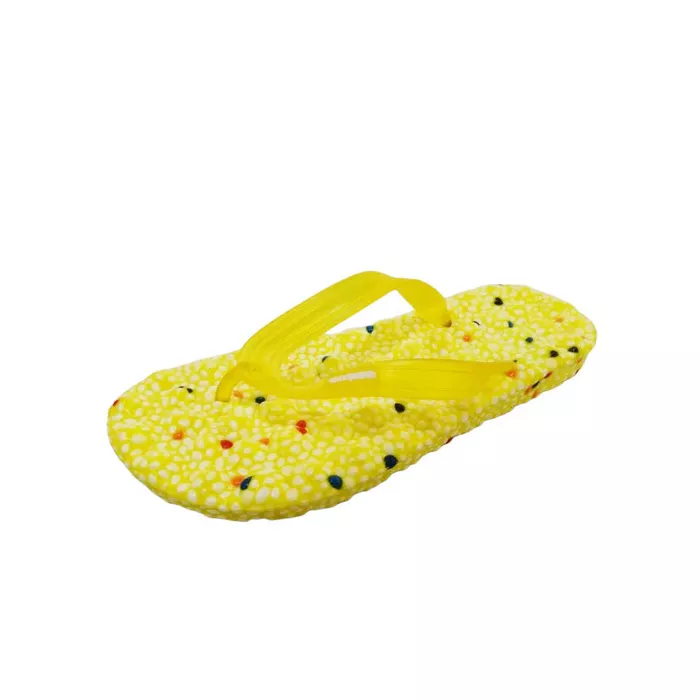
Quick Answer: One-piece injection moulding removes the two failures behind most slipper claims - delamination at the toe and a seam opening after wet and dry cycles - by taking away the midsole seam and the glue line altogether: sole and upper leave the same mould. It also fixes the commercial frame: 600 pairs per colour, 30 pairs per carton, and 25-35 days after deposit and sample approval. That is the specification we build to in Jimei, Xiamen,.
In this guide:
- What one-piece injection moulding actually means
- The two failures it removes
- Why glue lines and midsole seams fail
- One-piece vs assembled: specification comparison
- The tooling boundary: one mould per shape
- Colour, artwork and the 600-pair minimum
- How we cost this order
- Packing, carton count and freight per pair
- Size runs and the 24-35 kids split
- Buyer mistakes when specifying a one-piece slipper
- Testing two or three styles in one mixed container
- FAQ
What One-Piece Injection Moulding Actually Means
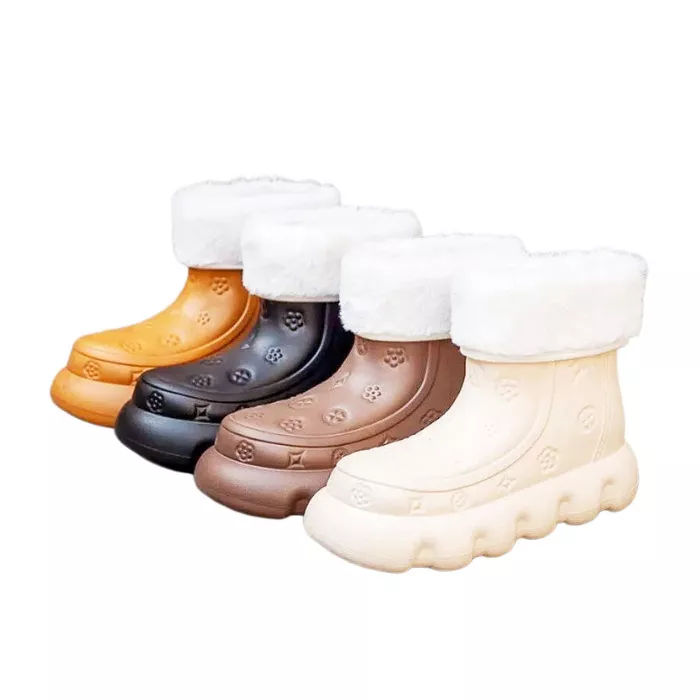
In a one-piece injection moulded EVA slipper the sole and the upper are not two parts joined later. Foamed EVA resin is injected into a single mould and the whole shoe leaves that mould as one continuous body. There is no midsole seam to stitch and no glue line to bond, so the construction has no interface where two materials can part. Buyers sometimes read "one-piece" as a cost claim; it is a construction claim first. The garden clog is the clearest example in our range: ventilated, washable and made in one cycle, with a pivoting heel strap added afterwards.
The Two Failures It Removes
The first failure is delamination at the toe. In an assembled slipper the upper is bonded to a footbed or midsole, and repeated flexing at the toe post works that bond open, especially after wet and dry cycles. The second is a seam opening along the midsole, where stitching or adhesive meets water, heat and abrasion. Both are interface failures: they need two parts and a join. One-piece moulding designs the interface out instead of inspecting it out. We do not claim a test report or a percentage here; we simply note that across 12 years, 60+ countries, 500+ SKUs and 5 million pairs shipped, these are the two complaints an assembled construction generates that a one-piece body does not have the parts to generate.
Why Glue Lines and Midsole Seams Fail
Most buyers specify the resin and the print and never write a line about the join. That is where an assembled shoe lives or dies. A glue line has to survive container heat, a stockroom without air conditioning, retail lighting, and then a wet and dry cycle on a bathroom floor. A stitched midsole seam takes the same abuse at the stitch holes. A one-piece body has no bond line, no stitch holes and no separate footbed to lift. The trade-off is honest: you give up the ability to combine a hard sole with a soft lining, which is why an indoor mule with a soft footbed remains a different product. Choose the construction for the abuse the shoe will actually take.
One-Piece vs Assembled: Specification Comparison
Here is the comparison we walk through on an enquiry. Read down the column that matches your channel, then check the row that will cost you money after the first season.
| Decision | One-piece injected EVA | Assembled or bonded construction |
|---|---|---|
| Construction | Sole and upper leave one mould | Separate footbed, upper bonded or stitched |
| Failure list | No midsole seam, no glue line | Toe delamination, seam after wet-dry cycles |
| Tooling | One mould per shape | Several jigs, lower shape barrier |
| Colour | Mixed into resin, 600 pairs per colour | Surface print or dyed components |
| Weight per pair | Lightest of the constructions | Heavier with an added footbed |
| Typical programme | Core year-round slipper | Lined, printed or seasonal run |
The Tooling Boundary: One Mould per Shape
Because the mould is the whole shoe, a shape change is a new mould rather than a new pattern. That single fact should sit at the top of any development brief. Colour, print, strap and packaging can move within one tool; outline, sole thickness and size grade cannot. We covered the commercial side - who pays for tooling and who owns it - in our note on mould costs and tooling ownership. For a buyer, the practical rule is to freeze the shape before approving artwork, and to approve a physical sample before the production clock starts. Across seven series - home-comfort, casual, sports, boots, fashion, kids and business - the shapes that repeat are the ones worth tooling once.
Colour, Artwork and the 600-Pair Minimum
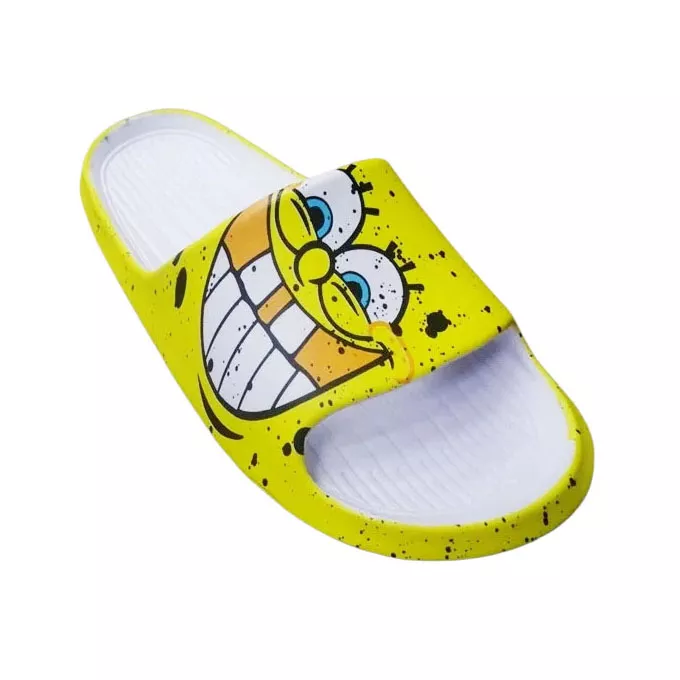
In a one-piece cycle the colour is mixed into the resin, not printed onto a finished surface. That is why the minimum is 600 pairs per colour: a short run never reaches a stable colour, and a shade that drifts between cartons looks like a quality problem on the shelf. Artwork is a separate decision. Send vector files with position, size and an exact colour reference, and confirm the print method on an approved sample before the batch. The printed kids slipper shows the other end of the range: same one-piece body, very different artwork load. If your programme needs many colourways, plan them as 600-pair blocks rather than as one mixed colour order.
How We Cost This Order
Here is how this order is actually costed on our desk in Room 2103, 22 Xingqian Road, Jimei, Xiamen. We start from the shape, because that fixes the mould. Then the resin and the colour count, because each colour is a 600-pair block. Then the print method, then the packing: one pair per polybag, 30 pairs per outer carton, so one colour is exactly 20 cartons. Only then do we put a unit price on the sheet and quote FOB Xiamen or EXW. We do not price a "slipper" in the abstract. Give us a shape, a colour count and an artwork file, and the number stops moving. Nicky Chen signs off the specification; enquiries go to [email protected].
Packing, Carton Count and Freight per Pair
One pair per polybag and 30 pairs per outer carton is our standard packing, so a first order of 600 pairs in one colour is 20 cartons and three colours is 60. On FOB Xiamen the carton weight and cube land on your forwarder's invoice; on EXW they land on yours. Ask for carton dimensions and gross weight with the quotation, not after the deposit, and normalise every offer to cost per shipped pair. A one-piece EVA body is light, which is the quiet advantage in a mixed container. Our material comparison explains why weight changes freight without changing the carton count. Three checks before you approve:
- Confirm pairs per carton and total carton count.
- Confirm gross weight and carton cube in writing.
- Confirm whether the quotation is FOB Xiamen or EXW.
Size Runs and the 24-35 Kids Split
Kids programmes are where a one-piece specification gets tested hardest. We run two size blocks: 24#-29# and 30#-35#. A small foot flexes a rigid body differently, and a strap that works at 34# can be too loose at 24#, so the kids size run is a tooling and fitting question, not just a labelling one. Write the size curve into the purchase order with the colour count, since each colour is still 600 pairs and the split across sizes has to be agreed before the batch. The home-comfort series is where most buyers start, then extend into kids. Three things to fix early:
- Which of the two kids size blocks the order covers.
- The size curve as quantities, not percentages.
- Whether the strap or heel detail changes across sizes.
Buyer Mistakes When Specifying a One-Piece Slipper
The first mistake is approving artwork on a hand-made sample and assuming the same print holds at production speed; we confirm a sample before the batch for exactly that reason. The second is asking for a shape change after the mould is cut and treating it as a small revision. The third is sending a target unit price without a target retail price, which leaves no way to choose between a one-piece body, a lining and a print method that the shelf can actually support. The fourth is ordering one colour in a quantity below 600 pairs and expecting a stable shade. None of these are supplier problems; all four are brief problems. A clear brief is the cheapest part of the whole order.
Three lines to put in the first email:
- Target retail price band and channel.
- Colour count with 600 pairs per colour.
- Shape reference and artwork file.
Testing Two or Three Styles in One Mixed Container
Mixed containers are routine for us, and a first order can combine two or three styles to test a market without paying for three full runs. Keep the size curve and the packing identical across the styles so the only variable is the style itself; otherwise the trial tells you nothing about demand. Production is 25-35 days after deposit and sample approval, FOB Xiamen or EXW. That timeline starts when the sample is approved, not when the enquiry arrives, which is the single most misunderstood line in a first order. Pair one core one-piece shape with one printed or lined variant, then read the reorder data before cutting a second mould. A trial order is a measurement, not a compromise.
FAQ
Is a one-piece EVA slipper always the cheapest option?
No. It removes two failure modes and ships light, but the mould is the whole shoe, so a new shape carries tooling. Compare cost per shipped pair over the season, not the first unit price.
Can I change the shape after the mould is cut?
Not as a revision. Colour, print, strap and packaging can change within one tool; outline, sole thickness and size grade need a new mould. Freeze the shape on an approved sample first.
Does one-piece moulding limit printed artwork?
It changes the method, not the option. Send vector artwork with position, size and an exact colour reference, and confirm the print on a sample before the batch.
What is the smallest first order?
600 pairs per colour, packed one pair per polybag and 30 pairs per carton. A first order can combine two or three styles in one mixed container.
How long does production take?
25-35 days after deposit and sample approval, quoted FOB Xiamen or EXW. The clock starts at sample approval, so artwork and colour decisions made early protect the ship date.
Send the artwork and your target retail price and we will come back with a mould, a print method and a landed cost. Talk to our team in Xiamen.