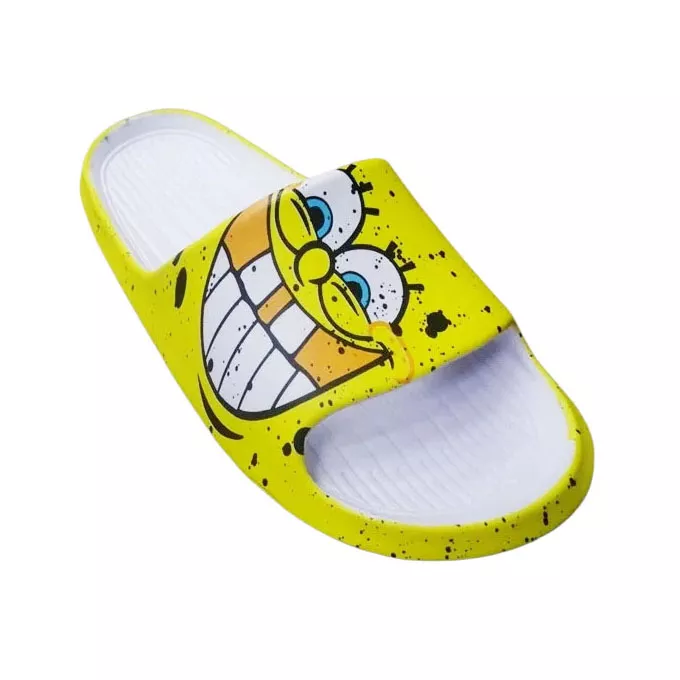
Quick Answer: Choose by market, not by unit price. One-piece injection moulded EVA is the default for most slipper programmes: no midsole seam, no glue line, 600 pairs per colour and 25-35 days after deposit and sample approval. PVC suits a printed seasonal run where artwork matters more than weight; rubber suits grip and heat. Across 12 years, 60+ countries and 500+ SKUs, we have found that this decision is almost always a market decision, not a material one.
In this guide:
- What EVA, PVC and rubber actually are
- Why one-piece injection moulding changes the failure list
- Start from the shelf, not the material
- Side-by-side specification comparison
- Weight, carton count and freight per pair
- Climate, storage and shelf life
- Print method, artwork and colour stability
- How we cost this order
- Size runs and the 24-35 kids split
- Buyer mistakes when choosing a material
- Testing two materials in one trial order
- FAQ
What EVA, PVC and Rubber Actually Are
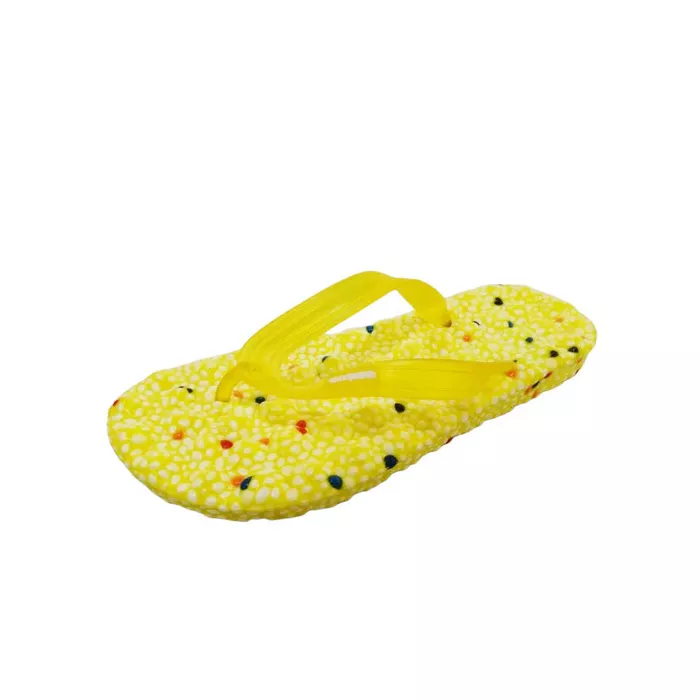
Three materials dominate the slipper category, and buyers often compare them as if they were three prices on one shelf. They are three different production systems. EVA is a foamed resin that we inject in one piece: sole and upper leave the same mould, with no midsole seam and no glue line. PVC is a denser vinyl compound, usually moulded around a separate footbed and often chosen for sharp printed graphics. Rubber, natural or synthetic, is the heaviest of the three and the most resistant to heat and abrasion. Each one changes the mould, the packed weight, the print method and the failure list. Our note on raw material volatility explains why resin and compound prices move differently across a season.
Why One-Piece Injection Moulding Changes the Failure List
Construction matters as much as resin. In a one-piece injection moulded EVA slipper there is no stitched midsole and no adhesive bond, so the two failures behind most after-sales claims - delamination at the toe and a seam opening after wet and dry cycles - are designed out rather than inspected out. It also makes the shoe lighter, which changes both the carton and the freight per pair. The trade-off is tooling: the mould is the whole shoe, so a shape change is a new mould, not a new pattern. A garden clog and a printed kids slipper can share one resin and still need completely different tooling, print jigs and size runs.
Start From the Shelf, Not the Material
The right question is not which material is best, but what the shelf will do to the shoe. Write down four conditions before anyone quotes: the retail price band, the climate, the channel and the expected shelf life. A beach kiosk in a hot market needs heat stability and a low freight per pair. An indoor catalogue programme needs a soft footbed and a lining that survives folding into a box. Once those four lines are on paper, the material usually selects itself, and the home-comfort series shows how one construction can be finished several ways. Three filters help narrow it:
- Heat and sunlight: EVA and rubber hold shape; PVC can stiffen.
- Artwork complexity: PVC takes sharp print; EVA needs the right method.
- Freight sensitivity: foamed EVA ships the lightest per pair.
Side-by-Side Specification Comparison
The table below is how we compare the three on a real enquiry. Read the column that matches your market, then check the row that will cost you money later.
| Decision | One-piece EVA | PVC | Rubber |
|---|---|---|---|
| Construction | One-piece injected, no glue line | Moulded, often a separate footbed | Vulcanised or moulded |
| Weight per pair | Lightest | Medium | Heaviest |
| Print and artwork | Good with the chosen method | Sharp, high-gloss | Limited surface |
| Heat and sunlight | Stable in normal retail use | Can stiffen over time | Most resistant |
| Tooling | One mould per shape | Lower tooling barrier | Heavier tooling |
| Typical programme | Core year-round slipper | Seasonal printed run | Grip or work use |
Weight, Carton Count and Freight per Pair
Material shows up twice in landed cost: in the unit price and in the carton. Our standard packing is one pair per polybag, 30 pairs per outer carton, so a 600-pair colour run is exactly 20 cartons. A heavier compound does not change that count, but it changes the gross weight of all 20, and therefore the ocean freight allocated to each pair. On FOB Xiamen the difference sits in your forwarder's invoice; on EXW it sits in yours. Ask for packed carton weight and carton dimensions with the quotation, not after the deposit. If you are comparing an EVA and a rubber quotation side by side, normalise both to cost per shipped pair before deciding.
Climate, Storage and Shelf Life
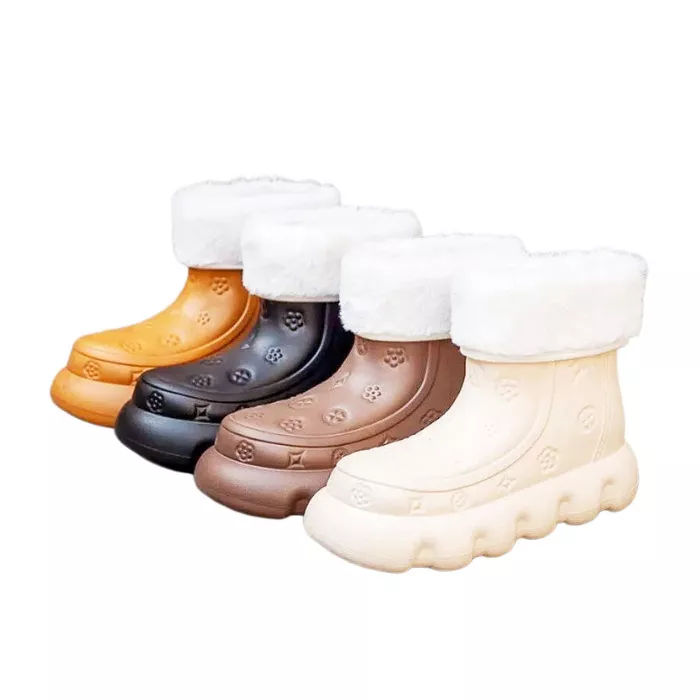
Climate is where a cheap material quietly becomes expensive. In hot markets a slipper may sit in a container, then a non-air-conditioned stockroom, then under retail lighting. PVC compounds can stiffen and lose flexibility across that chain; EVA holds its shape and rubber tolerates heat best, at the cost of weight. Cold does the opposite: a stiff sole in a winter catalogue is a comfort complaint, which is why an indoor mule with a soft footbed is specified by feel as much as by resin. Ask how long the shoe stays in the channel - a six-week promotion and a two-year core line are different specifications.
Print Method, Artwork and Colour Stability
Artwork is the second place a material choice becomes a production choice. On a one-piece EVA surface we choose the print method around the shape, the colour reference and the run length, then confirm it on a sample before the production batch. A printed kids slipper needs registration that survives a curved, slightly textured surface; a flat PVC panel takes a high-gloss graphic more easily. Because one-piece injection moulding produces the whole shoe in one cycle, colour is mixed into the resin rather than applied afterwards, which is why we hold the MOQ at 600 pairs per colour: a short run never reaches a stable colour.
How We Cost This Order
Here is how we build this quotation in Jimei, Xiamen. We start from your artwork and target retail price, then work backwards: which construction holds that print, which resin gives the required feel at that price, and how many pairs per colour the mould needs to run cleanly - 600, as a rule. From there the numbers are mechanical. One pair per polybag, 30 pairs per carton, 20 cartons for a single-colour trial. Tooling is quoted separately and stays your specification; the mould, print method and packing spec become the standard the reorder repeats. Add 25-35 days after deposit and sample approval, and choose FOB Xiamen or EXW at the same time, because the freight line belongs to a different owner in each case. We will also say honestly when a target retail price needs a different material rather than a thinner margin. That conversation costs less before the mould than after it.
Size Runs and the 24-35 Kids Split
Kids programmes add a decision adult ranges do not have. We run children's sizes in two bands, 24#-29# and 30#-35#, and the pair counts per size are the part buyers most often leave blank. Distribute the 600 pairs across the band in whole cartons so the size curve can be repeated on the reorder. Our sizing and packaging guide sets out the same logic for indoor lines. Three lines to fix before sampling:
- The band: 24#-29#, 30#-35#, or both.
- Pair counts per size, not just a range.
- Whole cartons per size so the curve is repeatable.
Buyer Mistakes When Choosing a Material
The mistakes we see are rarely about chemistry. They are about the order in which decisions get made. The most common is fixing a target unit price before the market, the channel and the artwork are written down - then every quotation becomes a negotiation rather than a specification. The second is comparing a light EVA slipper and a heavy rubber one on unit price only, without normalising to cost per shipped pair. A few habits remove most of the risk:
- Write the four market conditions before requesting a quote.
- Ask for packed carton weight with the quotation.
- Keep one variable per trial order so the result is readable.
Testing Two Materials in One Trial Order
You do not have to settle the argument on a spreadsheet. Mixed containers are routine for us, and a first order can combine two or three styles to test a market: one EVA core slipper and one printed PVC seasonal style, for example, both inside the 600-pairs-per-colour logic. Keep size curve, channel and packing identical, and the sell-through data tells you which material your shelf actually wants. Allow 25-35 days after deposit and sample approval, then read results by size and by week before committing to a container. With 500+ SKUs shipped and 5 million pairs accumulated over 12 years, we would still rather run a small, legible test than approve a full range on assumption. When the data is in, the reorder spec sheet is already written.
FAQ
Is EVA always cheaper than rubber?
Not on landed cost. EVA is lighter, so unit price and freight per pair both tend to be lower, but rubber may be the right specification where grip or heat resistance drives returns. Compare cost per shipped pair, not per ex-works pair.
Can I order fewer than 600 pairs per colour?
Six hundred is the point at which a one-piece injection run reaches a stable colour and a repeatable mould temperature. Below it, you pay for changeover twice. We would rather combine two or three styles in a mixed container than shorten one colour run.
Which material takes printed artwork best?
PVC gives a sharp, high-gloss graphic on a flat panel; one-piece EVA needs the print method chosen around the shape. Send the artwork and we will confirm the method on a sample before the production batch.
How long does a first order take?
25-35 days after deposit and sample approval, quoted FOB Xiamen or EXW. The clock starts once the sample is approved, not when the enquiry arrives, so artwork and colour references should be complete at the start.
Can one container hold more than one material?
Yes. Mixed containers are normal practice, and a first order of two or three styles is a sensible way to test a market. Keep packing and size curve identical so the comparison stays readable.
Tell us the market, the channel and the four conditions above, and send us your specification. Send the artwork and your target retail price and we will come back with a mould, a print method and a landed cost.