Quick Answer: For footwear sold in California, Proposition 65 is a right-to-know law, not a ban, a test standard or a certificate. The state list holds over 800 chemicals, the duty starts 12 months after listing, and businesses with nine or fewer employees are exempt. A warning is not a failed test result. Ask which listed chemicals were considered, who supplies the warning text, and what exposure assessment supports it, before sample approval.
In this guide:
- What Proposition 65 actually means for a pair of shoes
- Who carries the obligation
- When a warning is actually required
- What to ask for vs answers that tell you nothing
- Safe harbor levels, NSRL, MADL and the burden of proof
- What a clear and reasonable warning must say
- The 60-day notice and how a dispute reaches a factory
- How we plan this run from the factory side
- The documents to request before sample approval
- Writing it into the order: timing, mixed containers, size runs
- Where buyers get this wrong
- FAQ
What Proposition 65 Actually Means for a Pair of Shoes
Proposition 65 is California's 1986 Safe Drinking Water and Toxic Enforcement Act, administered by OEHHA. It requires the state to publish and update yearly a list of chemicals known to cause cancer or reproductive harm; over 800 entries since 1987. Two duties follow: give a clear and reasonable warning before knowingly and intentionally exposing anyone in California to a listed chemical, and do not knowingly discharge listed chemicals into drinking water sources. Nothing in the act sets a pass mark for a shoe or creates a Prop 65 certificate. Our REACH and SVHC guide makes the same point from the EU side: a regulation is duties, not a certificate.
Who Carries the Obligation
Split the responsibility before you split the paperwork. The duty sits on businesses doing business in California: the manufacturer, packager, importer, supplier or distributor, and in narrower cases the retailer. The 2016 amendments to the warning rules, fully effective from August 2018, let a manufacturer either affix a compliant label or send the retailer written notice with all warning materials and keep confirmation of receipt. For footwear imported from Xiamen, the US importer of record normally decides the wording. A non-US factory is not the duty holder, but it holds the material list and batch record any assessment rests on. Our CPSIA tracking label guide covers a different framework, so keep the briefs separate.
When a Warning Is Actually Required
A warning is not automatic. It is required where a business knowingly and intentionally causes an exposure to a listed chemical above the applicable safe harbor level. The warning duty takes effect 12 months after a chemical is listed, and the discharge prohibition 20 months after listing. A business with nine or fewer employees is exempt from both, as are government agencies. A company may also warn based simply on its assumption that a listed chemical is present, without measuring exposure. OEHHA states that businesses do not file reports explaining their warnings, so a competitor's warning tells you nothing about a test result. A warning is information, not a verdict.
What to Ask For vs Answers That Tell You Nothing
The middle column sounds reassuring but says nothing usable; the right column is the request to put instead. Answer each line with a named document or mark it outstanding.
| Line on the brief | Answer that says nothing | What to request instead |
|---|---|---|
| Overall status | "Prop 65 compliant" on a letterhead | A written list of the listed chemicals considered |
| Exposure basis | "It passes" with no number | The safe harbor level relied on, or the assessment behind it |
| Warning text | "We can add a label" | Artwork with the symbol, named chemical and website |
| Inputs | "No harmful materials" | A component declaration covering body, ink, coating and hardware |
| Online sales | No answer at all | Warning text for the product page and catalogue |
| Change control | Not mentioned | Notice if a compound, ink, print or sub-supplier changes |
Safe Harbor Levels, NSRL, MADL and the Burden of Proof
Safe harbor numbers are the hinge. For a carcinogen, the No Significant Risk Level is the exposure causing no more than one excess cancer case in 100,000 people over a 70-year lifetime. For reproductive harm, the Maximum Allowable Dose Level is the no-observable-effect level divided by 1,000. OEHHA has set more than 300. At or below the applicable level, no warning is required. Where no safe harbor exists, the business must either warn or show with reliable evidence that the exposure poses no significant risk; the burden sits with the business. Footwear is awkward because the route is often dermal, and public notices regularly state that no dermal safe harbor has been set for lead or cadmium. Ask a qualified professional, not a letterhead claim.
What a Clear and Reasonable Warning Must Say
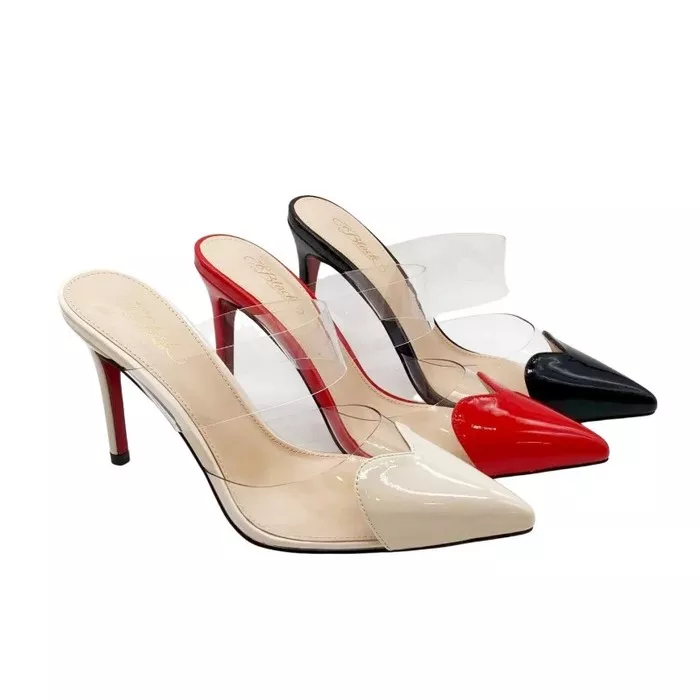
The 2016 amendments changed the sentence too. A full-length consumer product warning starts with a yellow triangle containing a black exclamation mark, then WARNING in bold capitals and the phrase "can expose you to" rather than "contains". It must name at least one listed chemical for each endpoint, say that the chemical is known to the State of California to cause cancer or reproductive harm, and point to www.P65Warnings.ca.gov. A short-form on-product warning may omit the chemical name but still needs the symbol, the endpoint and the website. A printed kids slipper, a navy-print rain boot and a three-colour stiletto pump carry different inks and coatings, so the declaration is style-specific. Ask for the artwork and the product-page text together.
The 60-Day Notice and How a Dispute Reaches a Factory
Enforcement is not only a government inspection. The California Attorney General, district attorneys, certain city attorneys, and any individual acting in the public interest can enforce it. Before suing, a private enforcer must serve a 60-day notice of violation on the alleged violator and on the Attorney General, naming the product, the chemical and the exposure alleged. Penalties can accrue per violation per day, so the first letter a brand receives often names a specific style and substance. That letter travels down the chain as an urgent request for a material declaration, a batch record and a warning decision. A factory that cannot say which compound or ink was used on a given date cannot answer it. That is the same logic as a permanent tracking label.
How We Plan This Run From the Factory Side
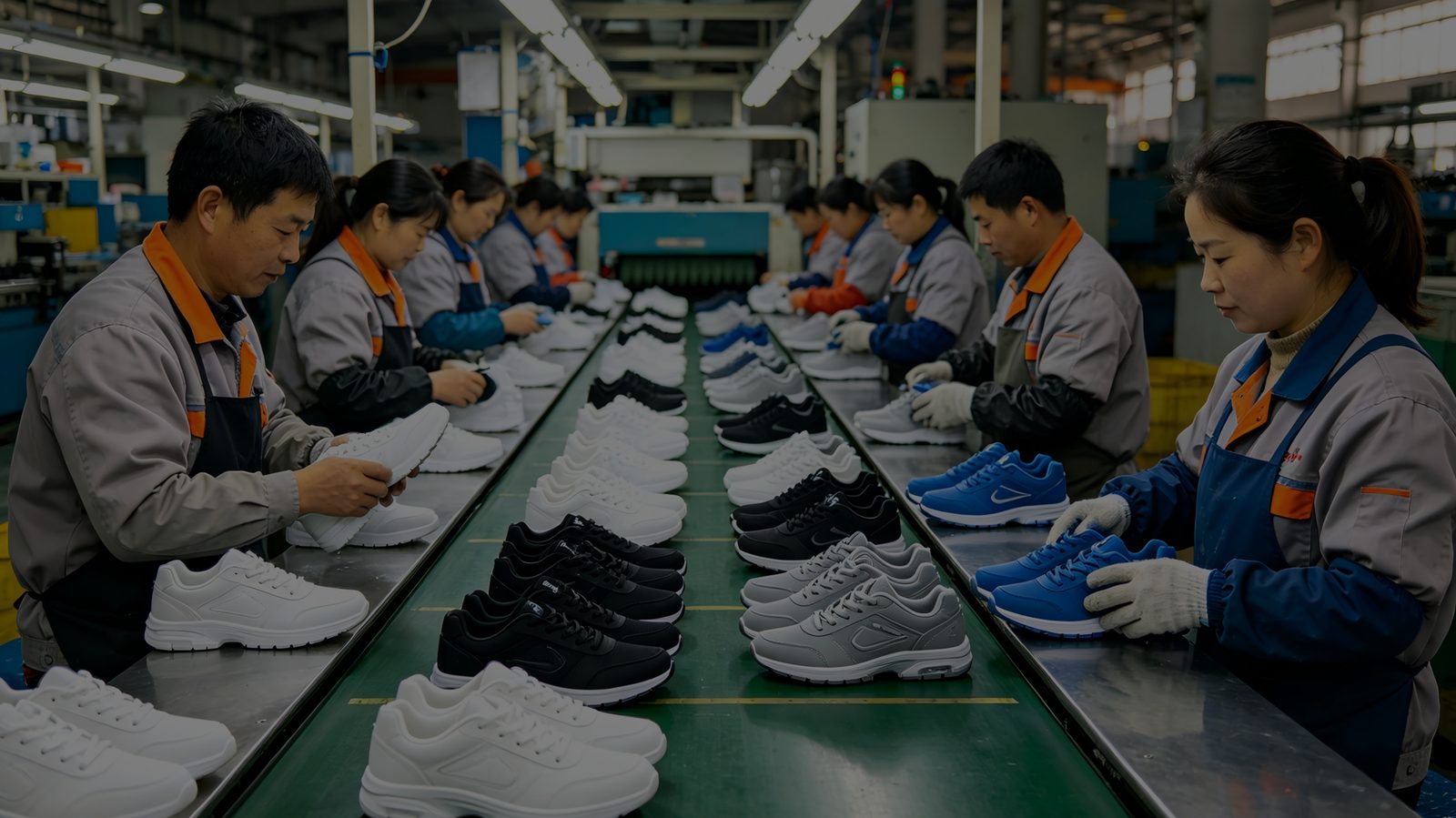
From our side the order is a sequence of named inputs, not a slogan. We read the product sheet, resolve every component to a material and a supplier, record which lines need a declaration or a screening result commissioned by the importer, then book the compound, ink and trim sources against the 600-pair minimum per colour. We hold the approved sample as the reference and set packing to one pair per polybag and 30 pairs per export carton. If a print method or a sub-supplier changes, we note it against the batch record. We have worked this way for 12 years, across 60+ countries, with 500+ SKUs and 5 million pairs shipped, from Room 2103, No. 22 Xingqian Road, Jimei, Xiamen.
The Documents to Request Before Sample Approval
Ask for a defined set, in writing, tied to the approved sample. Each should be dated and traceable to a style, colourway and size run:
- A component declaration naming the body polymer, print ink, coating, trim and adhesive, each with its supplier.
- The written exposure position: which listed chemicals were considered, the safe harbor level relied on, and who assessed it.
- The proposed warning artwork and the online listing text, plus a commitment to written notice before any material change.
We state plainly what we can supply and what the importer must commission; we do not claim reports we cannot show.
Writing It Into the Order: Timing, Mixed Containers, Size Runs
Production runs 25-35 days after deposit and sample approval, FOB Xiamen or EXW, so the brief has to close inside that window. Mixed containers are routine and a first order can carry two or three styles, but each style, colourway and size run needs its own declaration and warning artwork. Kids styles are graded in two runs, 24#-29# and 30#-35#, and a lined boot is a different input list from a moulded slide. The casual series shows the range. Three lines to close before the clock starts:
- Every style, colourway and size run in scope, each with its own component list and warning text.
- The listed chemicals, safe harbor basis and laboratory, identical across the set.
- The change-control commitment and the owner of the on-product and online warning.
Send the brief via our contact page; Nicky Chen at [email protected] handles it through to packing.
Where Buyers Get This Wrong
Three mistakes recur on most first compliance enquiries, and none is a chemistry problem. Each is a missing line, cheap to close before a deposit and expensive once cartons are packed:
- Asking for a "Prop 65 certificate" and accepting a letterhead statement instead of a written exposure position and a component declaration.
- Treating a warning as a failed test, or assuming no warning means a product was screened, when a business may warn on assumption alone.
- Leaving the warning artwork and online listing text until after sample approval, when a print change moves the ship date.
FAQ
Can you provide a Prop 65 certificate?
No such document exists to hand over. It is a right-to-know law built around warnings, not a product approval. We supply the component declaration, batch records and proposed artwork.
Does a warning mean the shoes failed a test?
No. A warning means the business believes a listed chemical may be present above the safe harbor level, or has chosen to warn without measuring. OEHHA collects no reports on individual warnings, so the label alone is not a test result. Ask which chemical prompted it.
Who is responsible for the warning wording?
The parties doing business in California: manufacturer, packager, importer, supplier or distributor, with retailer liability limited to defined cases. For imported footwear the US importer of record sets the wording. We supply the input data and artwork.
Do online listings need a warning too?
Yes. The 2016 regulations cover catalogues and internet sales as well as the label. Where a warning is required, the product page must carry it before purchase, matching the on-product text. Agree who supplies it at sample approval.
Does one assessment cover a mixed first order?
No. Mixed containers are routine, but several styles, colourways and two kids size runs mean several component lists and warning artworks, each tied to its own approved sample. Keep the listed chemicals, safe harbor basis and laboratory identical.
Send the artwork and your target retail price and we will come back with a mould, a print method and a landed cost.