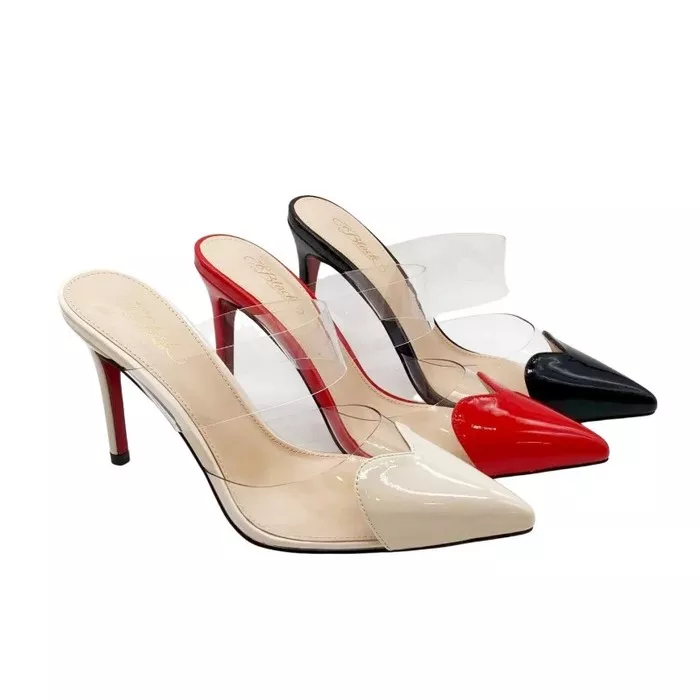
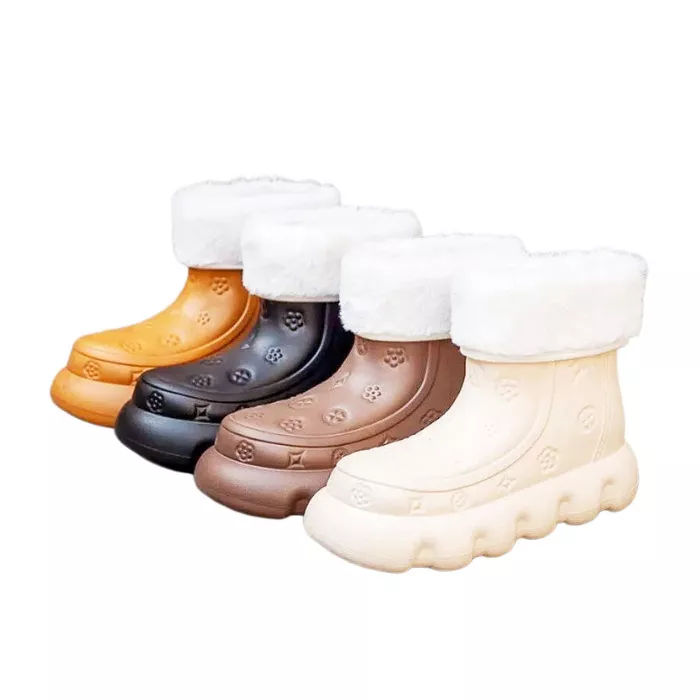
Quick Answer: For kids footwear entering the US, CPSIA applies to shoes designed for children 12 and under. Buyers ask most about a permanent tracking label with four fields and the 0.1% limit on eight phthalates. That limit legally targets children's toys and child care articles, not every shoe, so ask which rules your importer invokes. Request the label data, lead results and the third-party report basis before sample approval, not after cartons are packed.
In this guide:
- What CPSIA means for a pair of kids shoes
- Who carries the obligation
- What to ask for vs answers that tell you nothing
- The four fields a tracking label must carry
- Where the 0.1% phthalate limit actually applies
- Lead limits, third-party testing and the CPC
- Marking the shoe and the carton
- How we plan this run from the factory side
- The documents to request before sample approval
- Writing it into the order: timing, mixed containers, size runs
- Where buyers get this wrong
- FAQ
What CPSIA Means for a Pair of Kids Shoes
CPSIA is the Consumer Product Safety Improvement Act, the US federal framework administered by the CPSC. A children's product is one designed or intended primarily for children aged 12 or under, and footwear for that age group sits inside it. Four duties follow: lead limits on accessible materials, third-party testing against the applicable rules, a Children's Product Certificate issued on the basis of that testing, and a permanent tracking label on the product and its packaging. There is no CPSIA certificate a supplier can sell, and a letterhead line saying "CPSIA compliant" proves none of the four.
Who Carries the Obligation
Split the responsibility before you split the paperwork. For imported goods the US importer of record carries the duty for the tracking label and for issuing the Children's Product Certificate; the CPSC states plainly that for foreign-made products the importer is responsible. A non-US manufacturer is not the certifier, but it is the only party holding the material list, the production date and the batch record, so it carries a practical duty to supply that information accurately. Our REACH and SVHC guide makes the same point from the EU side: a regulation is duties, not a certificate.
What to Ask For vs Answers That Tell You Nothing
Most gaps begin with a vague reply. The middle column sounds reassuring but carries no usable information; the right column is the request to put instead. None claims a supplier already holds them; answer each line with a named document or mark it outstanding.
| Line on the brief | Answer that tells you nothing | What to request instead |
|---|---|---|
| Overall status | "CPSIA compliant" on a letterhead | A written list of the rules invoked for this style |
| Tracking label | "We can add a label" | Artwork showing all four fields on the shoe and on the pack |
| Batch coding | "Made in China" only | The coding rule linking batch to production records |
| Phthalates | "No phthalates" with no scope | Whether the 0.1% limit is a legal rule here or a buyer specification |
| Lead and CPC | A generic "pass" | Tests by a CPSC-accepted lab on the approved sample, and the CPC issuer |
| Change control | No answer at all | Written notice if a material, ink, print or sub-supplier changes |
The Four Fields a Tracking Label Must Carry
The tracking label requirement sits in section 14(a)(5) of the Consumer Product Safety Act, originally CPSIA section 103. It asks for permanent, discernible marks on the product itself and on its packaging, to the extent practicable, that let a manufacturer and an end buyer identify four things: the manufacturer or private labeler name; the place and date of production; detailed information about the process such as a batch or run number; and any other information that helps pin down the specific source. Existing permanent marks can count, but a country-of-origin line alone is not enough.
Where the 0.1% Phthalate Limit Actually Applies
The federal limit names eight phthalates, DEHP, DBP, BBP, DINP, DIBP, DPENP, DHEXP and DCHP, at no more than 0.1% each, and its statutory target is children's toys and child care articles, meaning products intended to help a child sleep, eat, suck or teeth. Ordinary kids footwear does not automatically fall into those two categories. That does not end the question: many importers write the same 0.1% figure into their own specifications, and printed inks, soft PVC trims and coated hardware are the inputs usually named for screening. The printed kids slipper and the navy-print rain boot show why the print is a separate input. Ask the importer to state in writing whether the limit is a legal rule or a buyer specification, then name the substances and the laboratory.
Lead Limits, Third-Party Testing and the CPC
Lead, by contrast, does apply broadly. Total lead in accessible substrate materials is limited to 100 ppm, and lead in surface coatings or paints to 90 ppm. Children's products must be tested against each applicable rule by a laboratory accepted by the CPSC, and the domestic manufacturer or the importer then issues a Children's Product Certificate based on a passing report. The certificate identifies the product, the manufacturer or importer, production and test dates and places, the laboratory, and the rules being certified. A test report is not a certificate, and a report for a different colourway is not a report for this one. We do not claim certificates or reports we cannot show; we state what we can supply and what the buyer must commission.
Marking the Shoe and the Carton
A tracking mark must stay legible for the product's life, so the method matters as much as the text. On a one-piece injection moulded EVA body there is no midsole seam and no glue line, which means the mark is usually embossed into the outsole, printed on the footbed or carried on the strap back, then repeated on the pack. Standard packing is one pair per polybag and 30 pairs per export carton, and the packaging layer carries its own marking duty. Tie the batch code to the production record, the packing list and the test file. Our packing and QC guide covers how to keep that record aligned across cartons.
How We Plan This Run From the Factory Side
From our side of the desk the order is a sequence of named inputs, not a slogan. We read the product sheet, resolve every component to a material and a supplier, record which lines need a declaration and which need a report from the importer's laboratory, then book the print, ink and trim sources against the 600-pair minimum per colour. We hold the approved sample as the reference and set packing to one pair per polybag and 30 pairs per carton. We have worked this way for 12 years, across 60+ countries, with 500+ SKUs and 5 million pairs shipped, from Room 2103, No. 22 Xingqian Road, Jimei, Xiamen.
The Documents to Request Before Sample Approval
Ask for a defined set, in writing, tied to the approved sample. Each should be dated and traceable to a style, colourway and size run:
- A component declaration naming each accessible input, its supplier and any ink or coating system, with the batch coding rule.
- Label artwork for the shoe and the pack, showing the manufacturer name, place and date of production, and batch detail.
- The written rules list, the named substances and the CPSC-accepted laboratory, plus a commitment to notice before any material change.
Tell us which documents the importer needs and we will state plainly what we can provide.
Writing It Into the Order: Timing, Mixed Containers, Size Runs
Production runs 25-35 days after deposit and sample approval, quoted FOB Xiamen or EXW, so the compliance brief has to close inside that window. Mixed containers are routine and a first order can carry two or three styles to test a market, but each style, colourway and size run needs its own record. Kids styles are graded in two runs, 24#-29# and 30#-35#, and a lined kids snow boot is a different input list from a moulded slide. The kids series shows the range. Three lines to close before the clock starts:
- Every style, colourway and size run in scope, each with its own component list and label artwork.
- The named rules, the laboratory and the approved sample each report must refer to.
- The change-control commitment and the party issuing the Children's Product Certificate.
Our contact page is the route for sending the brief, and Nicky Chen at [email protected] handles it through to packing.
Where Buyers Get This Wrong
The same three mistakes appear on most first compliance enquiries, and none is a chemistry problem. Each is a line missing from the brief, cheap to close before a deposit and expensive once cartons are packed:
- Asking for a "CPSIA certificate" and accepting a letterhead statement in place of a written rules list and a component declaration.
- Assuming the 0.1% phthalate limit applies to every shoe by law, or ignoring it entirely when the importer has written it into the specification.
- Leaving the label artwork and batch coding until after sample approval, when a change to the mould or the print moves the ship date.
FAQ
Can you provide a CPSIA certificate?
No such document exists to hand over. CPSIA is a framework of legal duties; a Children's Product Certificate is issued by the importer or domestic manufacturer on the basis of third-party testing. We supply the material, production and batch information it rests on.
Does the 0.1% phthalate limit apply to my kids shoes?
Ask your importer to confirm in writing. The federal limit targets children's toys and child care articles, so ordinary footwear is not automatically in scope, though many buyers write the same limit into their specification. We screen the named substances on the approved sample if the brief requires it.
What must the tracking label show?
Four things: the manufacturer or private labeler name, the place and date of production, batch detail, and any other source information. The mark should be permanent on the product and the packaging where practicable.
Who is responsible for the tracking label?
For imported products the US importer of record is responsible. We supply the production date, place, batch coding data and proposed artwork so the importer can meet that duty.
Does one set of documents cover a mixed first order?
No. Mixed containers are routine, but several styles, colourways and size runs mean several component lists and label artworks, each tied to its own approved sample. Keep the rules list and laboratory identical across them.
Send the artwork and your target retail price and we will come back with a mould, a print method and a landed cost.