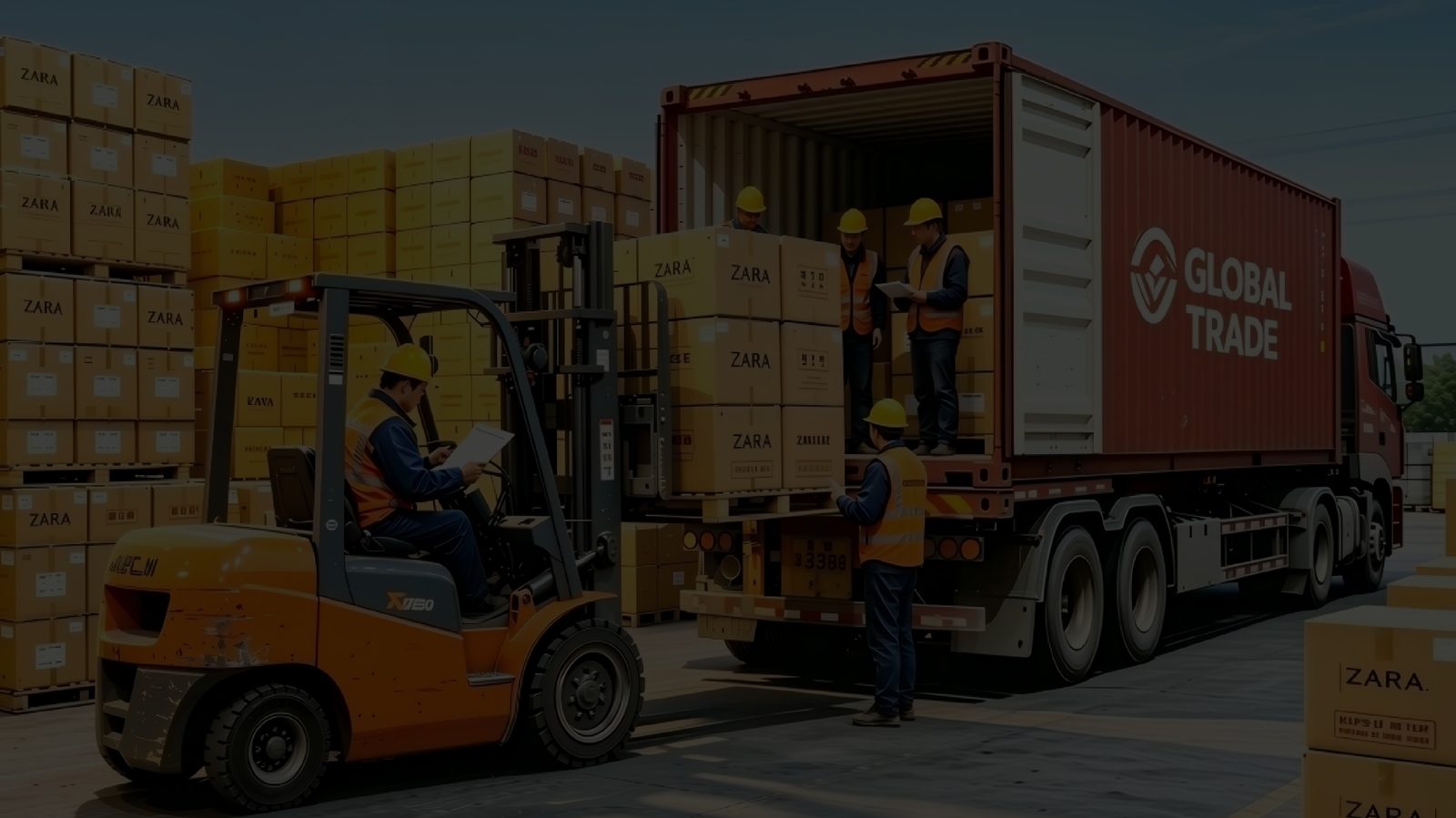
A 40HQ holds roughly 22,000 to 26,000 pairs of casual footwear, depending on carton cube. If your order is 6,000 pairs across four styles, you are not shipping a full container — you are shipping a partial load at a price that usually punishes you. The decision between a mixed container and a full container is mostly arithmetic, and the arithmetic is decided by carton dimensions rather than by the number of pairs.
Start with cube, not with pairs
Every style has a carton quantity and a carton volume. Multiply to get the cube for your order, then compare against the container capacity you are paying for. A 40HQ is about 67-68 cubic metres usable; a 20GP about 28; an LCL shipment is charged by cubic metre or by weight, whichever is greater.
As an example: 30 pairs per carton at 0.09 m³ per carton means 3.33 pairs per 0.01 m³, or roughly 2,100 pairs per 20GP at full cube. Change the packing to a shoebox that drops you to 24 pairs per carton at 0.11 m³, and the same container holds around 1,500 pairs. The shoe did not change; the freight per pair rose by about 40 percent.
When a mixed container wins
- You are testing a market with four to six styles at 500-800 pairs each
- Your retailer needs a colour story rather than depth in one style
- You are consolidating with other suppliers and shipping from one port
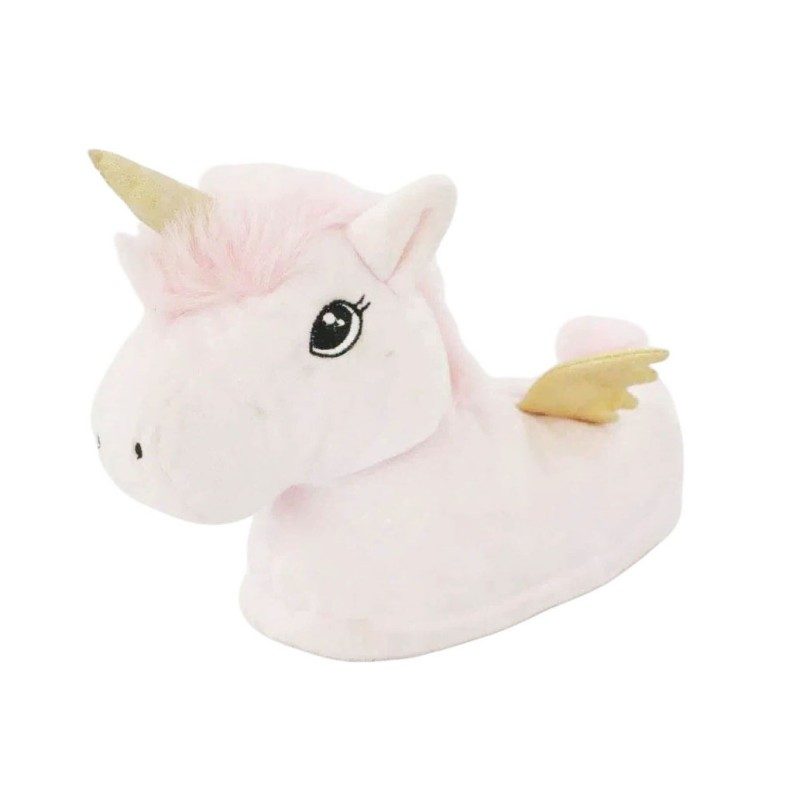
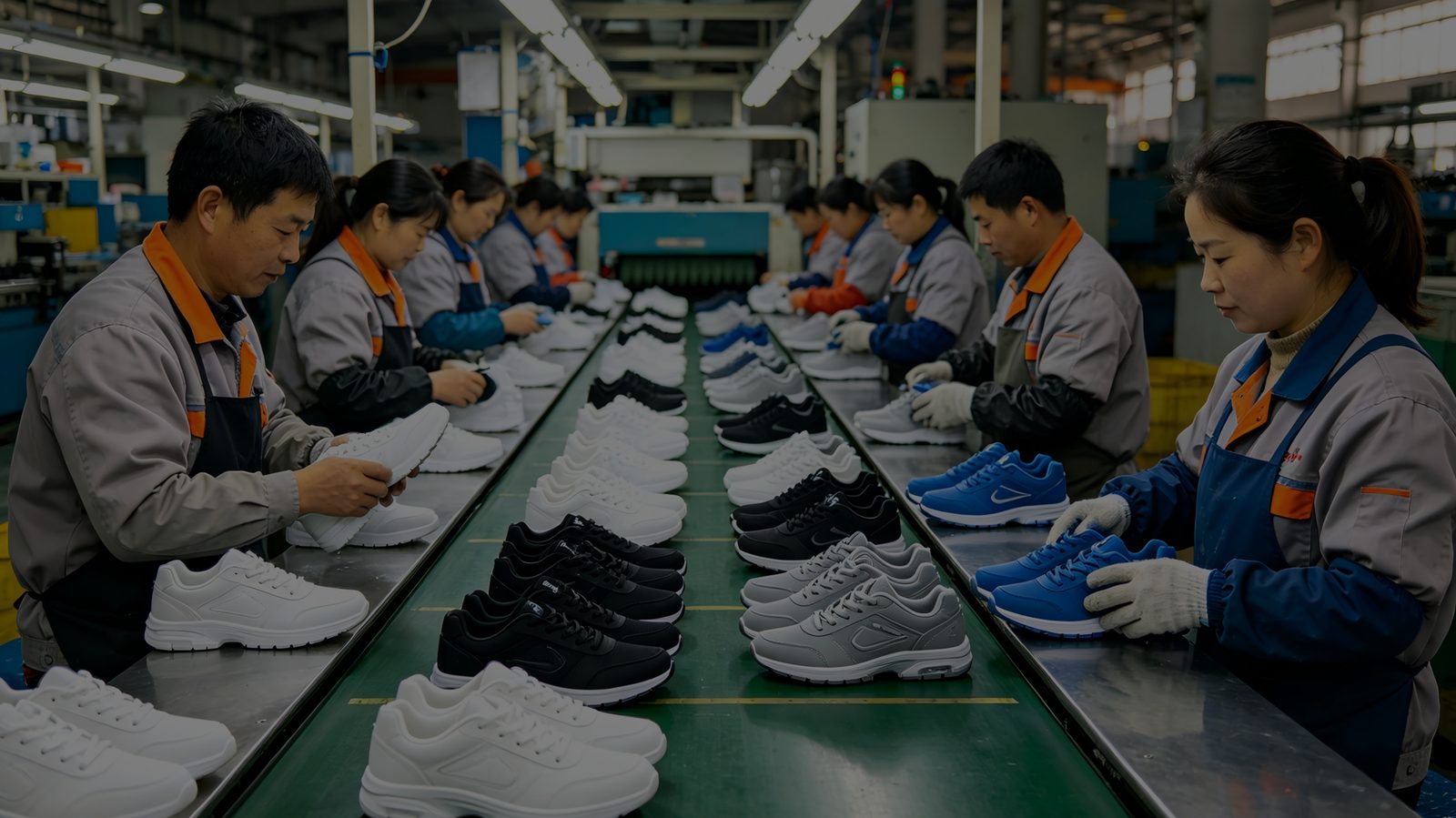
Mixed loading is standard for us. Because we hold several moulds in one factory, a container can carry slippers, casual styles and boots in one booking, with one set of export documents. The catalogue shows carton quantity per style, which is the number you need to build the load plan.
When to take the full container
When one style has proven sell-through and you can commit 8,000 pairs or more. At that depth, the per-pair production cost drops, the packing line runs uninterrupted, and you avoid the mixed-load surcharge that forwarders charge for handling multiple suppliers. Depth also means one colour, which reduces your markdown exposure on the slower colours.
The classic pattern: first order mixed, second order two styles deep, third order a full container of the winner. Buyers who skip step one usually end up with 20,000 pairs of a colour their market did not want.
Consolidation detail that costs money
A mixed container from two suppliers needs both to deliver to the same warehouse on the same week, or you pay storage. It also needs matching carton markings, or the destination customs broker will re-handle the load. And it needs one party to own the load plan — usually us, when we are the consolidator, which is why we ask for carton dimensions before quoting freight rather than after.
For buyers building a first order, the kids footwear range and the fashion and boot range mix well: they share carton footprints and they sell in different seasons, which spreads your stock risk across the year.
Payment and timing
Mixed containers usually require a 30 percent deposit with the balance against the bill of lading. Production runs 25-35 days, and a consolidated load adds three to five days for the second supplier's delivery window. Plan 45 days from deposit to sailing, then add your sea transit.
FAQ
What is the minimum for a mixed container?
There is no fixed pair count — the constraint is cube. In practice, a mixed order of 4,000-6,000 pairs across four to six styles fills a 20GP efficiently. Below that, LCL is usually cheaper despite the higher rate per cubic metre.
How many styles can go in one container?
Six to eight is comfortable. Beyond that, packing lists become error-prone and the risk of a mis-shipment rises faster than the merchandising benefit.
Who arranges the freight?
Either side can. We quote FOB Xiamen, so your forwarder handles the booking; if you prefer, we can quote CIF or arrange consolidation with our own forwarder and pass the cost through at cost.