
Quick Answer: Incoterms 2020 contains 11 rules, and not one of them sets a price. A rule divides delivery, risk, carriage, clearance and documents between buyer and seller; the amounts behind those duties come from your contract, your forwarder and your broker. We work on FOB Xiamen or EXW, and our standard carton holds 30 pairs. Write the rule, the named place and the edition into the contract, then check where risk passes before sample approval.
In this guide:
- What an Incoterms rule actually decides
- The two groups and where footwear fits
- The container problem: FCA vs FOB
- Where risk and cost part company
- Who handles each step: a comparison
- The documents each term asks of us
- How we plan this run from the factory side
- What the 2020 edition changed
- Mixed containers and the first trial order
- Where buyers get this wrong
- A pre-order checklist for the term line
- FAQ
What an Incoterms Rule Actually Decides
The Incoterms rules are private contract terms published by the ICC since 1936 and revised for 2020. They do not apply automatically: the sales contract has to name the rule, the named place and the edition. They also do not transfer ownership of the goods, set payment terms, or provide remedies for breach; those live in the rest of your contract. What a rule does is allocate delivery, risk, carriage, export and import clearance, documents and the list of costs, now gathered in article A9/B9 of each rule. So "who pays what" is really "who arranges and carries which step". Our landed cost guide explains why the import side stays with the importer of record. We publish no amounts on this page.
The Two Groups and Where Footwear Fits
Eleven rules sit in two groups. Seven work with any mode of transport: EXW, FCA, CPT, CIP, DAP, DPU and DDP. Four are reserved for sea and inland waterway carriage: FAS, FOB, CFR and CIF. A footwear container leaving Xiamen is an ocean shipment, but the group is chosen by where the goods are handed over, not by the vessel alone. Ask one question first: at which physical point does the carrier take the cartons? If that point is a factory, a warehouse or a container yard, a rule from the first group usually describes the handover better. Different constructions fill a carton differently, so that point is a physical fact measured on packed cartons, not a preference.
The Container Problem: FCA vs FOB
Here is the part most footwear buyers miss. FOB requires the seller to place the goods on board the vessel named by the buyer; delivery happens at that moment. A packed container is normally handed to the carrier at a terminal days before loading, when the seller loses control of it. Using FOB leaves a gap between the real handover and the contractual one. FCA places delivery at the point where the carrier takes charge, which matches a container yard. The 2020 revision of FCA article A6/B6 addresses the documentary objection: the parties may agree that the buyer instructs the carrier to issue a bill of lading with an on-board notation to the seller after loading. Confirm that wording with your forwarder and bank before signing. A moulded EVA clog is a typical full-container case.
Where Risk and Cost Part Company
In the C rules, the two lines move separately. Under CFR, CIF, CPT and CIP the seller contracts and pays for carriage to the named destination, yet risk passes to the buyer at the earlier shipment point. A buyer who reads "freight paid to destination" as "the seller carries the risk all the way" has misread the rule. Insurance follows the same split: CIF defaults to Institute Cargo Clauses (C), while CIP now requires the wider cover of Clause (A) or similar; the seller procures the policy, but a claim belongs to the buyer. Our packing guide covers the measured carton data. The rule tells you who owns each step, not a figure.
Who Handles Each Step: A Comparison
Read the table as a map of obligations. "Seller" and "Buyer" describe who arranges the step, not what it costs; no figure is published here, and the rule itself never supplies one.
| Step | EXW | FOB | CIF | DDP |
|---|---|---|---|---|
| Packing and carton marking | Seller | Seller | Seller | Seller |
| Inland leg to the port | Buyer | Seller | Seller | Seller |
| Export clearance | Buyer | Seller | Seller | Seller |
| Main carriage | Buyer | Buyer | Seller | Seller |
| Cargo insurance | No rule duty | No rule duty | Seller, Clause (C) | No rule duty |
| Import clearance and final delivery | Buyer | Buyer | Buyer | Seller |
A rule names the handover place, never an amount. Our file shows a packing specification, carton marks, a packing list and a commercial invoice aligned with the approved sample; everything else is issued by the carrier, the broker or the importer of record.
The Documents Each Term Asks Of Us
Every term starts from the same physical record: one pair per polybag, 30 pairs per outer carton, with a carton count for each style and colourway. From that we prepare the packing specification, carton marking, packing list and commercial invoice. Under FOB Xiamen we complete export formalities and deliver to the port; under EXW we make the cartons available at the named place and your forwarder takes over the inland leg and export filing. Where a sea shipment needs a verified gross mass, we supply the carton count, measured cube and packed weights behind the shipper's declaration. Ask who is named as shipper and who receives the originals; a mismatch stalls release at destination.
How We Plan This Run From the Factory Side
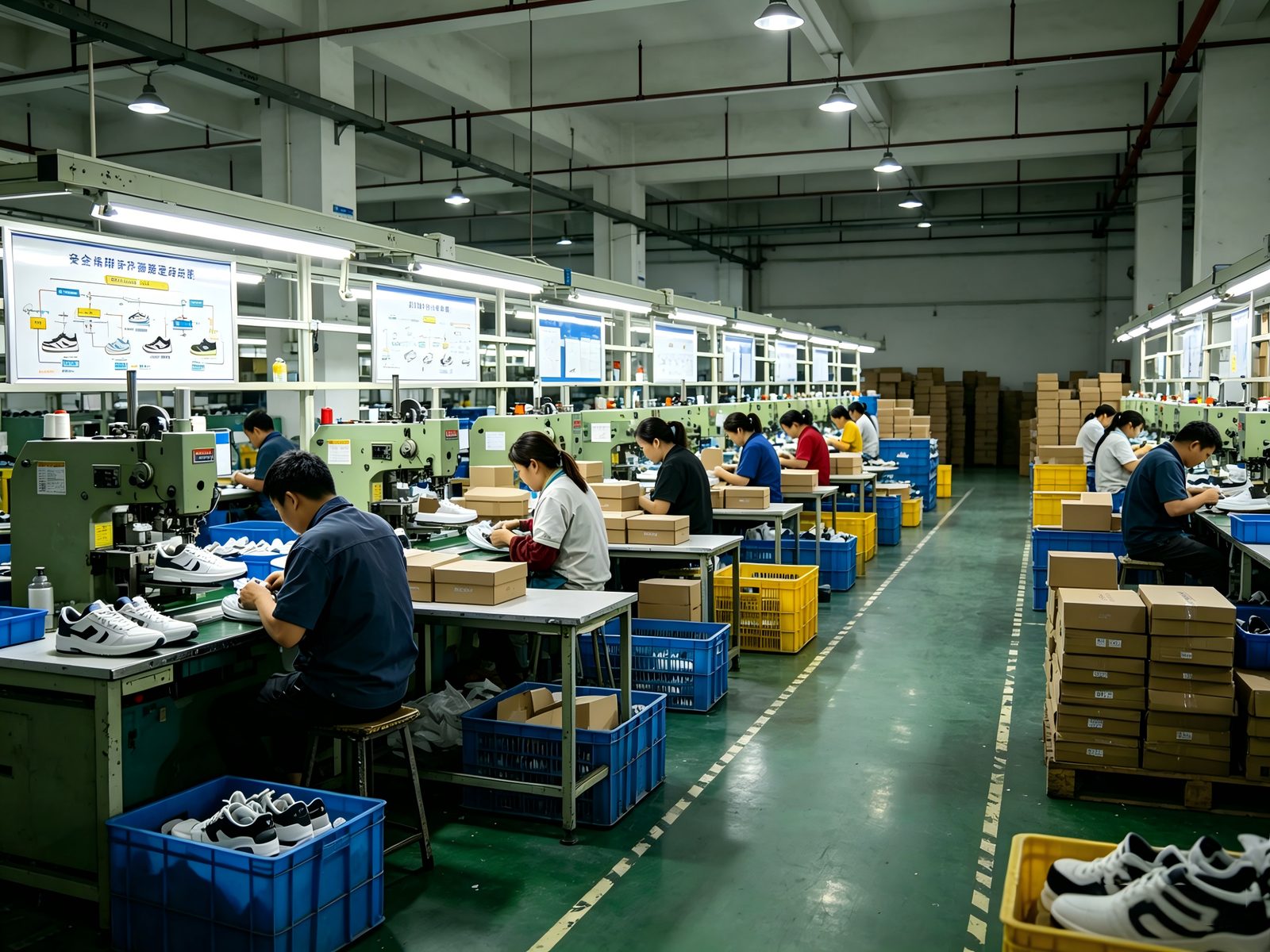
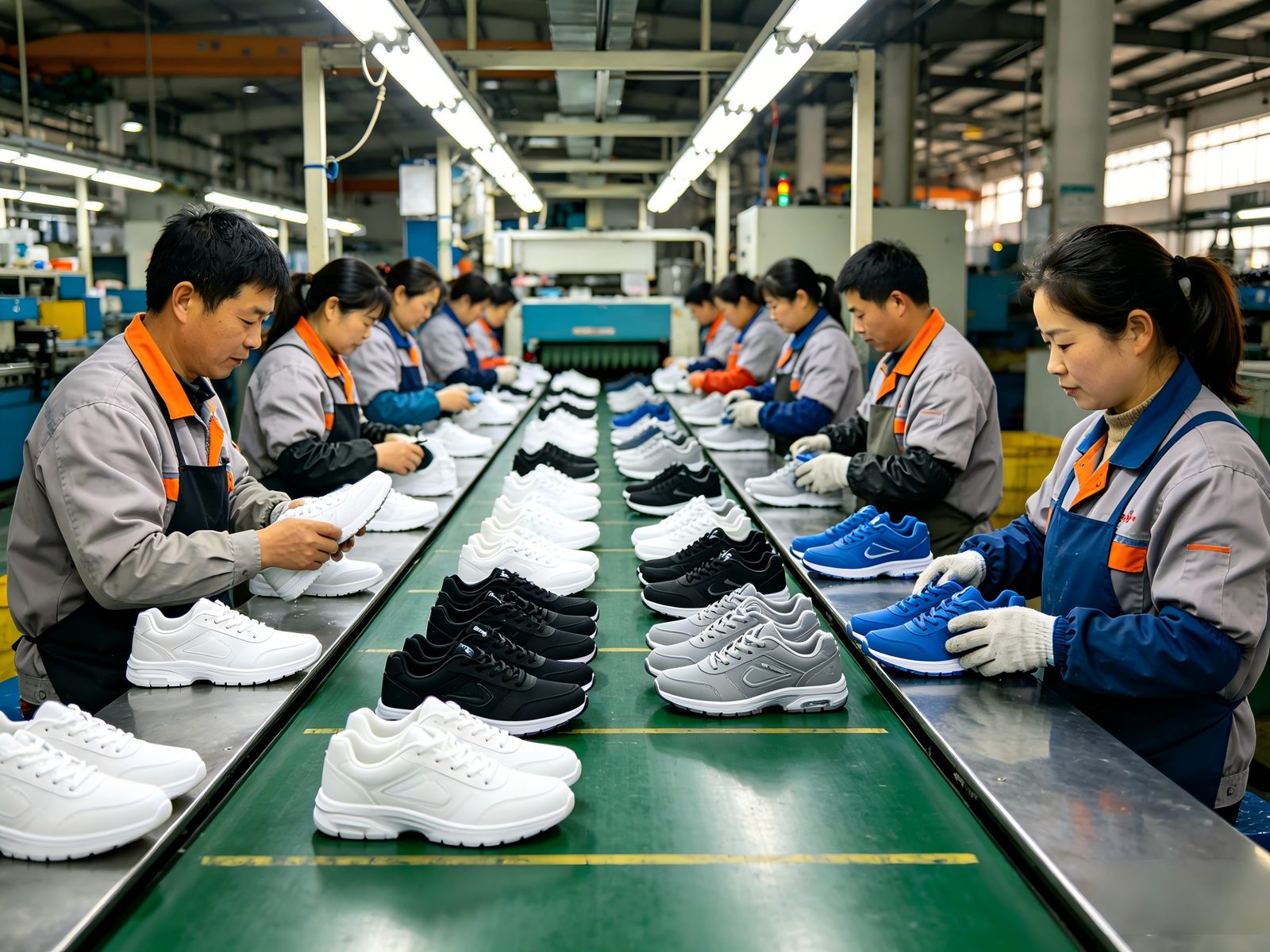
We plan backwards from the handover point, not from a figure. Once the term, the named place, the artwork and the approved sample are fixed, production runs 25-35 days after deposit and sample confirmation. MOQ is 600 pairs per colour. One-piece injection moulded EVA has no midsole seam and no glue line, so shape is set by the mould and the carton count can be planned early. We split the packing list by style, colour and size run, print the carton marks and stage the cartons. If the term changes from FOB Xiamen to EXW after approval, we reissue the handover note and the document list; the production slots stay the same, the responsibility line does not. This is scheduling and documents, not a price calculation.
What the 2020 Edition Changed
Six changes matter here. FCA article A6/B6 now allows an agreed on-board bill of lading after loading. CIP requires Clause (A) insurance cover or similar, while CIF keeps Clause (C) as its default. DAT was renamed DPU, and the distinction is explicit: under DAP the seller does not unload, under DPU the seller does. All costs for a rule are gathered in article A9/B9. Security-related obligations appear in A4 on carriage and A7 on clearance, with their costs in A9/B9. Finally, FCA, DAP, DPU and DDP recognise carriage arranged with the seller's or buyer's own transport. None of these changes creates a certificate for a factory, and none sets an amount.
Mixed Containers and the First Trial Order
A first order combining 2-3 styles to test a market is routine for us, and a mixed container does not change the trade term. What it changes is the packing list: every style and colourway needs its own carton count and its own description. A garden clog, a lined mule and a kids rain boot stack differently, so one line reading footwear is not a usable document. Children's styles split into 24#-29# and 30#-35#, changing the carton count again. Agree the split before sample approval and keep it identical on the invoice, packing list and carton marks. Browse the casual series when you choose the styles for the trial.
Where Buyers Get This Wrong
- Writing "FOB China" without a named port. A rule needs a named place, and a country is not a delivery point.
- Using FOB for a container handed to a yard before loading, then discovering the risk window does not match the paperwork.
- Assuming CIF means the seller carries the risk to destination. It means the seller contracts carriage; risk passes earlier.
- Expecting the term to settle payment, ownership or remedies. Those belong in the sales contract.
- Omitting "Incoterms 2020" from the contract, which leaves the edition open to argument when a document is disputed.
Each is a wording problem, cheapest to fix before sample approval.
A Pre-Order Checklist for the Term Line
- Name the rule, the exact place and the edition in the sales contract and on the order.
- Confirm with your forwarder where the carrier actually takes the cartons, and whether FCA or FOB describes that point.
- List the document set, the shipper name and who receives the originals; add insurance wording if a C rule is used.
- Add a written change clause covering term, packaging, artwork and hangtag changes, with a reissued handover note.
Our Jimei team can walk the term line with your forwarder before production. Over 12 years we have shipped to 60+ countries across 500+ SKUs, and the handover note comes first.
FAQ
Can you give us a landed figure under DDP?
No. We work on FOB Xiamen or EXW. DDP would make the seller the importer of record at destination, and we do not take that role or publish any amount. Your broker builds that figure from our production file.
Which term should we use for a full container?
Start from the handover point. If the carrier takes the container at a yard before loading, FCA usually describes the delivery better than FOB; the 2020 FCA article A6/B6 lets the parties agree on an on-board bill of lading. Confirm the document requirement with your bank.
Does an Incoterms rule transfer ownership or set payment?
No. The rules allocate delivery, risk, carriage, clearance, documents and the list of costs. Ownership, payment timing, warranty and remedies are separate clauses in your sales contract.
Do you hold an Incoterms certificate?
We do not claim an Incoterms certificate, a compliance certificate or an approved term ruling; no such document exists to hand over. The ICC certificate is a personal training credential, not a factory approval. We supply the production file and the handover note.
What if we change the term after sample approval?
Put it in writing. The named place, inland leg, clearance duties and document list all move with the term. We reissue the handover note before the change reaches production; the 25-35 day window still runs from deposit and sample confirmation.
Contact our team to align the term with your forwarder. Send the artwork and your target retail price and we will come back with a mould, a print method and a landed cost.