Quick Answer: The split between heading 6402 and heading 6404 is decided by the upper, not by the sole. Chapter 64 has six headings, and under its Note 4 the upper is the material with the greatest external surface area. Moulded EVA clogs and slides sit on the 6402 side; a mesh runner with a textile upper sits on the 6404 side, even with a rubber outsole. We prepare the material declaration; your importer or broker decides the classification.
In this guide:
- What the 6402 / 6404 split actually decides
- The six headings of Chapter 64
- How the upper material is determined
- How the outer sole material is determined
- Heading 6402 vs heading 6404: a side-by-side comparison
- Why heading 6401 is a separate question for moulded footwear
- The narrow definition of sports footwear in the subheading note
- Who decides the classification, and what a binding ruling does
- How we plan this run from the factory side
- The documents to request before sample approval
- Where buyers get this wrong
- FAQ
What the 6402 / 6404 Split Actually Decides
Most buyers arrive here after a broker rejects a code, or two similar styles land in different headings. The answer is unglamorous: it is the upper. Heading 6402 covers footwear with outer soles and uppers of rubber or plastics. Heading 6404 covers footwear with outer soles of rubber, plastics, leather or composition leather and uppers of textile materials. Both accept the same family of soles, so the sole cannot separate them. A classification question is really a material question, and the answer has to be written down per style and colourway. Our REACH and SVHC guide makes a related point: a regulation sets out duties and tests, not a document a supplier can hand over.
The Six Headings of Chapter 64
Chapter 64 of the Harmonized System contains six headings. Heading 6401 covers waterproof footwear with outer soles and uppers of rubber or plastics, where the uppers are neither fixed to the sole nor assembled by stitching, riveting, nailing, screwing, plugging or similar processes. Heading 6402 covers the remaining footwear with outer soles and uppers of rubber or plastics. Heading 6403 is for leather uppers. Heading 6404 is for textile uppers. Heading 6405 collects other footwear, and 6406 covers parts. These four-digit headings are the international framework; destinations extend them into longer national lines. A code used in one market is not automatically a code for another.
How the Upper Material Is Determined
Note 4(a) to Chapter 64 gives the test: the material of the upper is the constituent material having the greatest external surface area, with no account taken of accessories or reinforcements such as ankle patches, edging, ornamentation, buckles, tabs, eyelet stays or similar attachments. Note 3 adds a trap: rubber and plastics include textiles carrying an external layer of rubber or plastics visible to the naked eye. A coated textile can therefore be read as plastics. An engineered mesh runner with a few moulded overlays still has a textile upper; the overlays are reinforcements, not the constituent material. Ask for the upper to be named in writing, not described as breathable or technical; those words tell a designer something and a customs officer nothing.
How the Outer Sole Material Is Determined
Note 4(b) applies the same logic to the bottom of the shoe: the outer sole is the material having the greatest surface area in contact with the ground, leaving out spikes, bars, nails or protectors. This matters, but not for the reason most buyers assume. It does not choose between 6402 and 6404, since both headings permit rubber or plastics outer soles. It matters within a heading and at the boundary with 6405. A sculpted foam midsole sitting under a rubber outsole is not the outer sole; the layer touching the ground is. One-piece injection is simpler: the same compound forms the upper and the ground-contacting surface. Either way, the material declaration should name the ground-contacting layer separately from any midsole, cushioning or lining.
Heading 6402 vs Heading 6404: A Side-by-Side Comparison
Read the table as a brief to send with a sample request. The middle columns are the public framework.
| Line on the brief | Heading 6402 | Heading 6404 |
|---|---|---|
| Upper material | Rubber or plastics | Textile materials |
| Outer sole | Rubber or plastics | Rubber, plastics, leather or composition leather |
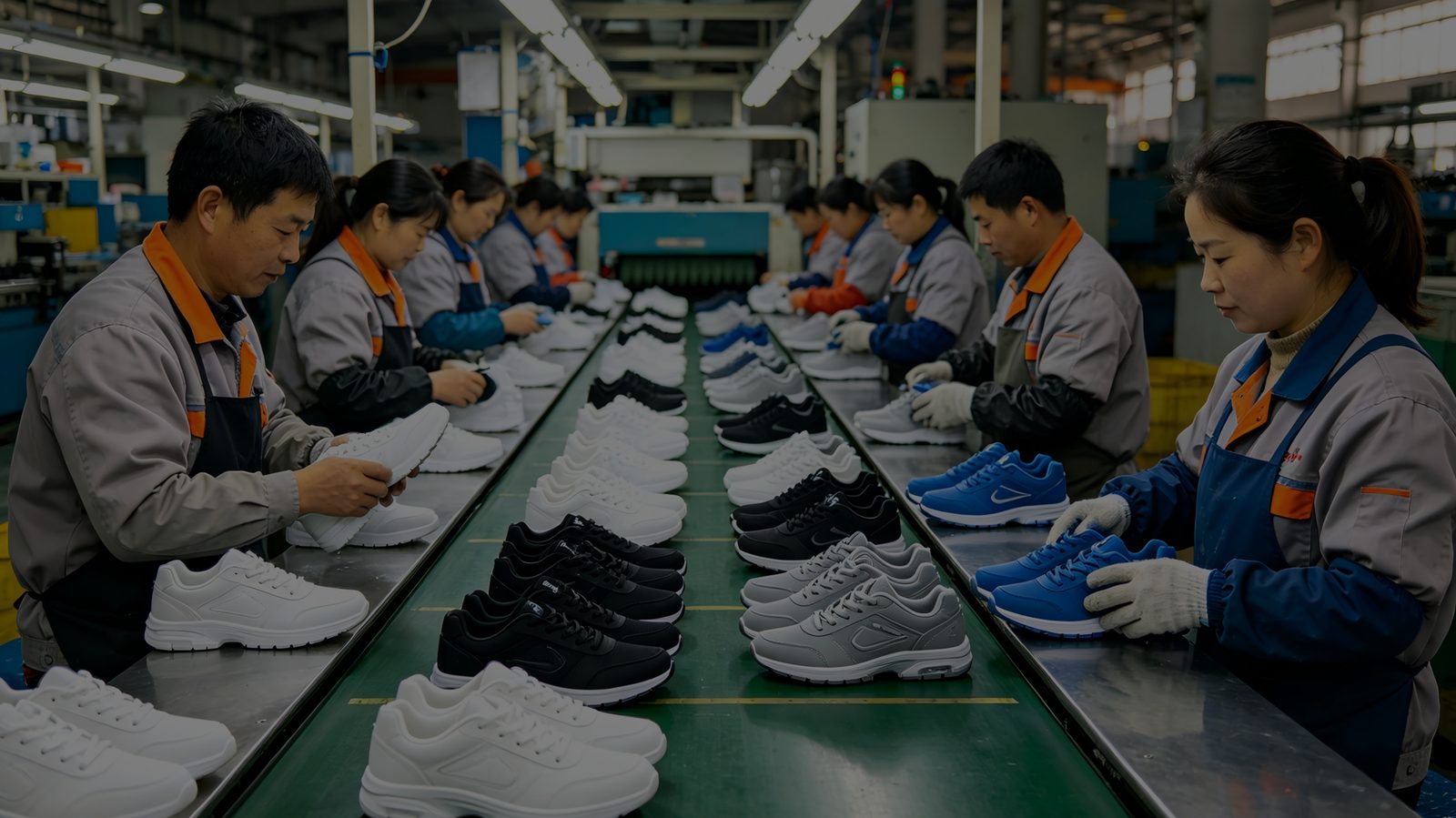
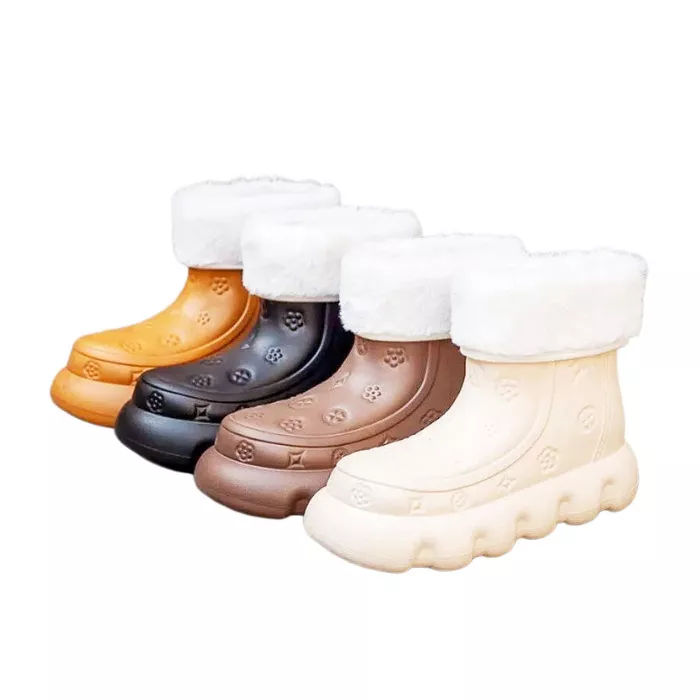
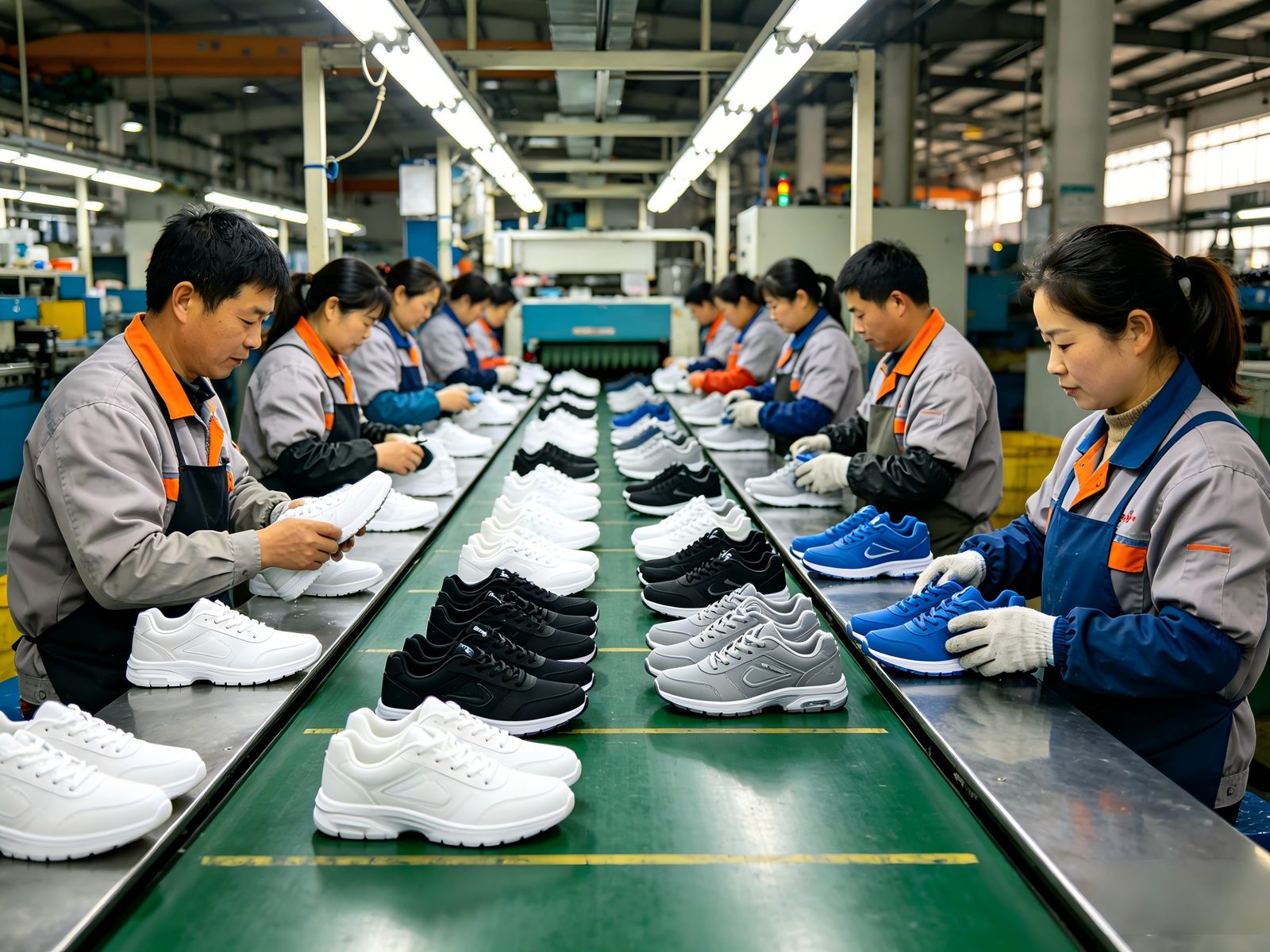
| Typical construction | One-piece moulded EVA clog or slide | Mesh or knit upper on a cemented sole |
| Deciding test | Greatest external upper surface, Note 4(a) | The same test, with a different result |
| Common assumption to drop | The sole material settles the heading | A sports silhouette settles the subheading |
| What to request | Upper compound named per colourway | Upper fabric named per colourway |
Why Heading 6401 Is a Separate Question for Moulded Footwear
Buyers of injection-moulded footwear often meet a third heading. Heading 6401 is not the home of all moulded shoes; it requires waterproof footwear whose uppers are neither fixed to the sole nor assembled by stitching, riveting, nailing, screwing, plugging or similar processes. A seamless PVC rain boot is the kind of product that raises the question, while a ventilated EVA clog with a pivoting strap is normally discussed under 6402. We would not tell an importer which applies to their entry: the waterproof character and the destination's reading of the chapter notes belong to that decision. A seamless printed kids rain boot and a one-piece slide can come off the same floor and still be described differently on a declaration. Ask your broker to settle it against the sample, not against a catalogue photograph.
The Narrow Definition of Sports Footwear in the Subheading Note
Another shortcut is assuming that anything looking like a trainer belongs in a sports subheading. The subheading note is much narrower. For the subheadings that use the expression, sports footwear applies only to footwear designed for a sporting activity and having, or having provision for, the attachment of spikes, sprigs, stops, clips, bars or the like, and to skating boots, ski-boots, cross-country ski footwear, snowboard boots, wrestling boots, boxing boots and cycling shoes. A general training shoe with a plain moulded sole is not brought into that definition by its shape or its marketing. Our sports range covers running and court styles; the declaration still names the upper fabric and the ground-contacting layer. A brief saying sports footwear without quoting the note is a design description, not a classification argument.
Who Decides the Classification, and What a Binding Ruling Does
Classification is decided at the destination, by the importer of record and the broker filing the entry. A factory outside that jurisdiction supplies the material and construction data; it does not issue a ruling or print a national code on a spec sheet as a product attribute. Where the answer is uncertain, an importer can request an advance or binding ruling from the destination authority, submitting a material breakdown, the assembly method, photographs and the intended use. Our Prop 65 reading follows the same division: the legal duty sits on the importing side, while the factory holds the records.
How We Plan This Run From the Factory Side
On our side the work is scheduling and description, not classification. One-piece injection in EVA gives a moulded upper and sole with no midsole seam and no glue line, so the declaration for a ventilated garden clog is short. MOQ is 600 pairs per colour, packed one pair per polybag and 30 pairs per outer carton. Production runs 25-35 days after deposit and sample approval, on FOB Xiamen or EXW terms. Mixed containers are routine, and a first order can combine 2-3 styles to test a market. We have 12 years of production behind us, 500+ SKUs across 7 series, shipments to 60+ countries and more than 5 million pairs made. Fix the material wording at sample approval, when a change is still cheap. Contact Nicky Chen at [email protected], Room 2103, No. 22 Xingqian Road, Jimei, Xiamen.
The Documents to Request Before Sample Approval
Six written items turn a classification discussion into something a broker can use. Ask for all of them while the sample is open for revision.
- A component declaration naming the upper, outer sole, midsole, lining, ink, coating and hardware for each style and each colourway.
- The construction method stated plainly: one-piece injection, cemented assembly, or stitched assembly.
- A spec sheet carrying the size run, for example 24#-29# or 30#-35# on kids styles.
- Photographs of the external upper with reinforcements and overlays marked.
- A written notice clause covering a change of compound, fabric, print method or sub-supplier.
- Confirmation of who files the entry and who answers a customs query, with a named contact.
Where Buyers Get This Wrong
The expensive errors are administrative, and all three appear after packing.
- Asking a supplier for "our HS code" as a fixed attribute, then reusing it in a destination with a different national extension.
- Letting a mixed container of 2-3 styles share one material declaration, so the mesh upper and the moulded EVA upper are described by a single line.
- Requesting the declaration after cartons are sealed, when the 25-35 day window has closed and no sample remains to be re-examined.
Each is a timing problem, solved by putting the request into the sample approval note. Send us your brief with styles and colourways listed and we will return the material declaration with the sample confirmation.
FAQ
Is a slipper always classified in heading 6402?
Not automatically. Heading 6402 requires both the outer sole and the upper to be of rubber or plastics, and a waterproof moulded boot may raise heading 6401 instead. Ask for a named material declaration rather than a code from a previous shipment.
Can you give us a certificate stating our HS code?
No such document exists to hand over. Classification is a decision made at the destination, not a certificate a factory issues, and we do not claim any certification or test report. We provide the component declaration and construction description your broker needs.
Does a rubber outsole move a mesh runner into heading 6402?
No. Heading 6404 allows outer soles of rubber, plastics, leather or composition leather. The distinguishing element is the upper: an engineered mesh or knit upper is a textile upper under Note 4(a).
Who is responsible if the entry is questioned?
The importer of record and the broker filing the entry carry that responsibility. We keep the material declaration, the sample record and the batch reference, and answer technical questions on construction and compounds. A change to any input is notified in writing.
What actually changes for us in practice?
Not a price list or a new certificate. What changes is the paperwork: one declaration per style and colourway, agreed before sample approval, with a written change clause. That is the difference between a clean entry and a late query.
Send the artwork and your target retail price and we will come back with a mould, a print method and a landed cost.