Quick Answer: A private label garden clog specification is nine lines: one-piece injected EVA body, ventilation layout, heel strap, colour count, artwork files, size curve, print method, packing and incoterm. The number that governs the rest is 600 pairs per colour - pigment is mixed into the resin, so a shorter run never holds a stable shade. One pair per polybag and 30 pairs per carton makes one colour 20 cartons, and production runs 25-35 days after deposit and sample approval.
In this guide:
- What a garden clog specification must cover
- The one-piece body and the heel strap
- Ventilation holes, drainage and where they sit
- EVA vs PVC vs rubber: a specification comparison
- Colour, artwork and the 600-pair rule
- Size runs, fit and the 24-35 kids split
- How we cost this order
- Packing, carton count and freight per pair
- Buyer mistakes when writing a clog brief
- Testing two or three styles in one mixed container
- From brief to approved sample: the 25-35 day clock
- FAQ
What a Garden Clog Specification Must Cover
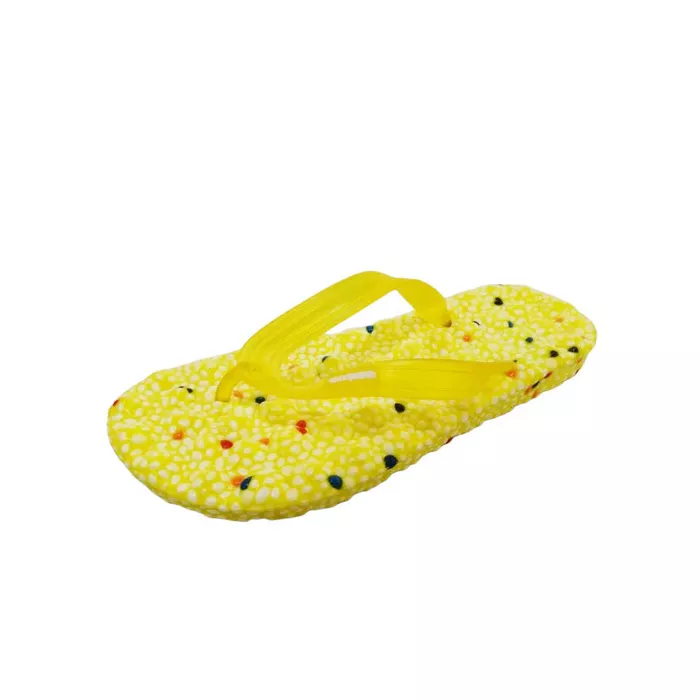
Most private label enquiries arrive as a photograph and a target unit price. That is not a specification, and it is why two factories can quote the same picture at very different numbers. A garden clog brief needs nine lines before anybody can cost it: construction, ventilation layout, heel strap, colour count, artwork files, size curve, print method, packing and incoterm. The lemon yellow garden clog is a useful reference because every one of those lines is visible on the sample: a ventilated EVA body, a pivoting heel strap, one colour and a fixed carton count.
The One-Piece Body and the Heel Strap
The body is a single injection moulded EVA shell. Sole and upper leave one mould, so there is no midsole seam and no glue line to stitch or bond. That matters for a garden clog, because the shoe is worn wet, rinsed off and left in the sun, which is exactly the cycle that opens a bonded joint. The heel strap is added afterwards and pivots, so the same body works as an open slide or as a secured clog. We set out why removing the join removes the two common failures in our note on one-piece injection moulding. Specify the strap as its own line: material, attachment point, and whether it ships folded flat or locked over the heel.
Ventilation Holes, Drainage and Where They Sit
Ventilation holes are not decoration. They let water out and air in, they reduce weight, and they decide how much unbroken surface is left for a print. A dense hole pattern across the whole vamp looks technical but leaves no clean area for a logo; a sparse pattern gives a bigger print window and a slightly heavier shoe. Put the hole layout on the spec sheet as a drawing with dimensions, not as a photograph, and mark the intended print area on the same drawing. Holes also interrupt the surface where a strap or a plug sits, so those positions have to be agreed before the mould is cut.
EVA vs PVC vs Rubber: A Specification Comparison
Read the material line against the channel, not against the unit price. Our material comparison covers the chemistry; the table below is the shorter version we work through on a clog enquiry.
| Decision | One-piece injected EVA | PVC | Rubber |
|---|---|---|---|
| Construction | Single moulded shell, no seam | Moulded or assembled parts | Vulcanised or bonded sole |
| Colour | Pigment in resin, 600 pairs per colour | Compound or surface colour | Usually black or dyed |
| Weight per pair | Lightest of the three | Mid range | Heaviest |
| Wet behaviour | Washable, drains through holes | Can stiffen, slower to drain | Durable, slow to dry |
| Shape change | New mould | New mould or jig | New mould |
| Typical programme | Core garden and pool clog | Promotional price line | Heavy duty or work use |
Colour, Artwork and the 600-Pair Rule
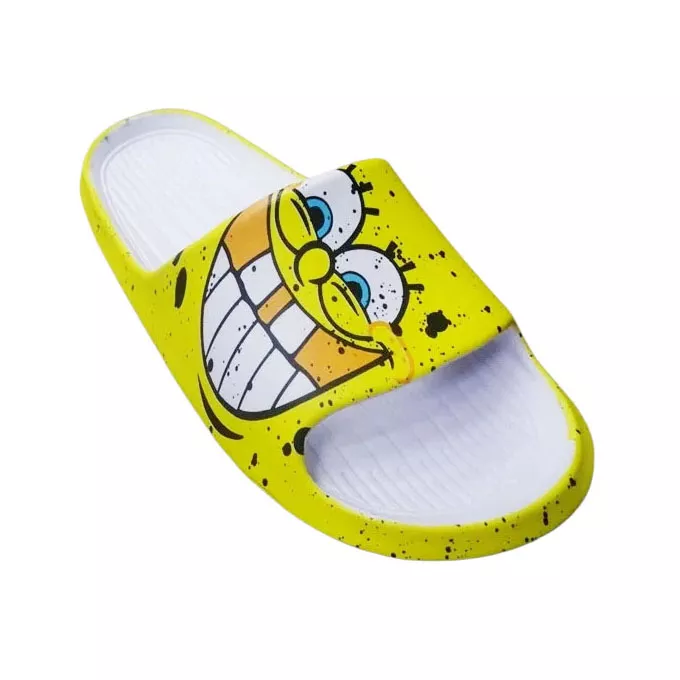
Colour is mixed into the EVA resin before the shot, not printed onto a finished shoe. That is why the minimum is 600 pairs per colour: a shorter run never reaches a stable shade, and cartons that differ slightly look like a quality problem on a retail shelf. Plan colourways as 600-pair blocks rather than as one mixed colour order. Artwork is a separate decision. Send vector files with position, size and an exact colour reference, and agree the print method on an approved sample before the batch starts. The printed kids slipper sits at the other end of the range: a similar one-piece body carrying a much heavier artwork load.
Size Runs, Fit and the 24-35 Kids Split
A clog is an unforgiving fit because there are no laces to adjust. Write the size curve as quantities, not percentages, and put it in the purchase order alongside the colour count. For kids we run two blocks, 24#-29# and 30#-35#; a strap that holds at 34# can be too loose at 24#, so the split is a fitting question as much as a labelling one. Adults and kids cannot share one size grade without a new mould. Most buyers start in the casual series and extend into kids after the first season, which keeps a single shape and a single tool at the centre of the range. Three things to fix before sampling:
- Which of the size blocks the order covers.
- The size curve as quantities per size.
- Whether the strap changes across size blocks.
How We Cost This Order
Here is how this order is costed on our desk in Room 2103, 22 Xingqian Road, Jimei, Xiamen. We start from the shape, because the mould is the whole shoe. Then the resin and the colour count, since each colour is a 600-pair block. Then the print method, then the packing: one pair per polybag, 30 pairs per outer carton, so one colour is exactly 20 cartons. Only then does a unit price go on the sheet, quoted FOB Xiamen or EXW. We do not price a garden clog in the abstract, and we do not price a photograph. Give us a shape, a colour count and an artwork file and the number stops moving. Nicky Chen signs off the final specification; enquiries go to [email protected].
Packing, Carton Count and Freight per Pair
One pair per polybag and 30 pairs per outer carton is our standard packing, so 600 pairs in one colour is 20 cartons and three colours is 60. Ask for carton dimensions and gross weight with the quotation rather than after the deposit, and normalise every supplier offer to cost per shipped pair. On FOB Xiamen the carton weight and cube land on your forwarder's invoice; on EXW they land on yours. Three checks before you approve the packing line:
- Confirm pairs per carton and the total carton count.
- Confirm gross weight and carton cube in writing.
- Confirm whether the quotation is FOB Xiamen or EXW.
Buyer Mistakes When Writing a Clog Brief
The first mistake is approving artwork on a hand-made sample and assuming the same print holds at production speed. The second is asking for a shape change after the mould is cut and calling it a small revision; outline, sole thickness and size grade each need a new mould. The third is copying a clog brief onto a different shoe type - a closed-toe sandal with webbing straps has a different upper, a different closure and a different failure list. The fourth is sending a target unit price without a target retail price, which leaves no way to choose between a print method, a lining and a construction the shelf can actually support. None of these are supplier problems; all four are brief problems. A clear brief is the cheapest part of the order. Three lines to put in the first email:
- Target retail price band and sales channel.
- Colour count, with 600 pairs per colour.
- Shape reference, size curve and artwork files.
Testing Two or Three Styles in One Mixed Container
Mixed containers are routine for us, and a first order can combine two or three styles to test a market without paying for three full runs. Keep the size curve and the packing identical across the styles so that the style is the only variable; otherwise the trial tells you nothing about demand. Pair one core clog with one printed variant, then read the reorder data before cutting a second mould. Production is 25-35 days after deposit and sample approval, FOB Xiamen or EXW. That clock starts when the sample is approved, not when the enquiry arrives.
From Brief to Approved Sample: The 25-35 Day Clock
The delivery window is 25-35 days after deposit and sample approval. Everything that protects that date happens before approval: a frozen shape, an agreed colour count, artwork in vector format, a size curve written as quantities, and a print method confirmed on a sample. Decisions made after the mould is cut either move the ship date or need a new mould. Over 12 years we have shipped 5 million pairs to 60+ countries across 500+ SKUs, and the orders that run on time are the ones with a complete brief at the start, not the ones with the largest deposit. Our range spans seven series - home-comfort, casual, sports, boots, fashion, kids and business - but a specification is always written one style at a time.
FAQ
What is the smallest first order for a private label garden clog?
600 pairs per colour, packed one pair per polybag and 30 pairs per carton. A first order can combine two or three styles in one mixed container, so you do not need three full runs to test a market.
Can I change the hole layout or the shape after the mould is cut?
Not as a revision. Ventilation layout, outline, sole thickness and size grade are cut into the mould; colour, print, strap and packaging can still change within one tool. Freeze the drawing on an approved sample first.
Do I need to supply artwork in a specific format?
Vector files with position, size and an exact colour reference. Confirm the print method on an approved sample before the batch, since a hand-made sample does not reproduce at production speed.
Which incoterms do you quote?
FOB Xiamen or EXW. Ask for carton dimensions and gross weight with the quotation, then compare every offer as cost per shipped pair rather than as a unit price.
How long until shipment?
25-35 days after deposit and sample approval. The clock starts at sample approval, so colour, artwork and size decisions made early are what protect the ship date.
Send the artwork and your target retail price and we will come back with a mould, a print method and a landed cost. Talk to our team in Xiamen.