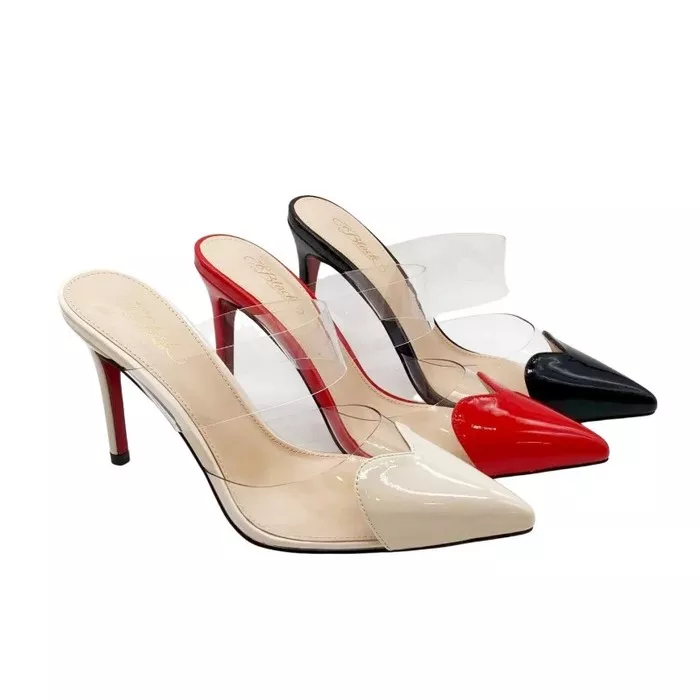
Quick Answer: For occasion footwear the packing and QC brief has to be written before production, not added at the carton stage. Our fashion and boot styles are assembled, rubber-soled shoes graded 35#-40#, unlike our one-piece injection moulded EVA slippers. Standard packing is one pair per polybag and 30 pairs per carton, with a 600-pair minimum per colour and production 25-35 days after deposit and sample approval. Ask for the protective packing lines and the inspection points in writing.
In this guide:
- What makes occasion SKUs different
- Read the product sheet before writing a QC checklist
- Standard polybag vs protective packing: a comparison table
- Heel, sole and attachment checks
- Surface, colour and trim checks
- How we plan this run from the factory side
- Carton count and the mixed first container
- The 35#-40# ladder and pairing
- Sampling, approval and the freeze list
- Where buyers get this wrong
- Working back from 25-35 days
- FAQ
What Makes Occasion SKUs Different
An occasion shoe is an assembly of parts, and each part has its own way of failing in transit. The stiletto pump in cream, black and red is a pointed fashion high heel on a rubber sole, graded 35#-40# and offered in three colourways. Its upper is cut and stitched, the heel is a separate component, and the surface is a light colour that shows handling marks. That is a different build from the one-piece injection moulded EVA we run on our slipper and clog lines, where the whole body leaves a single tool with no midsole seam and no glue line. Do not carry a slipper packing brief onto an assembled heel. The fashion series is where these styles sit; read the sheet for each one before you decide what the carton has to protect.
Read the Product Sheet Before Writing a QC Checklist
A QC checklist is only as good as the product sheet behind it. Ask the supplier to fill named lines for every style in the order: style description, sole material, colourways, size run, minimum per colour, and packing. On the stiletto pump those lines read fashion high heels, rubber, cream / black / red, 35#-40#, 600 pairs per colour, one pair per polybag and 30 pairs per carton. Once those lines are filled, the inspection points write themselves. Our specification guide for clogs sets out the same discipline on a moulded shape. Three lines buyers often leave open:
- Which components are separate parts and how each one is fixed to the shoe.
- Which colourways count as light surfaces that show marks and colour transfer.
- Whether the packing line is a confirmed specification or an assumption.
Standard Polybag vs Protective Packing: A Comparison Table
The two routes below share an order book but not a checklist. The left column is our published standard: one pair per polybag, 30 pairs per carton. The right column is a list of protective lines to confirm with the supplier in writing before production, not a claim that any of them is already included. Ask for each line to be either specified or crossed out, so nobody discovers the gap after the cartons arrive.
| Line on the brief | Published standard | Protective line to confirm |
|---|---|---|
| Inner unit | 1 pair per polybag | Separation between the two shoes |
| Heel area | Standard polybag | Heel support and clearance in the carton |
| Light upper | Standard polybag | Contact protection against colour transfer |
| Trim and crystals | Standard polybag | Protection from pressure and abrasion |
| Carton layout | 30 pairs per carton | Stacking plan and void fill |
| Carton marking | By style and colour | Size curve and run marked for splitting |
Heel, Sole and Attachment Checks
On an assembled heel the highest-risk points are the joints, not the outer silhouette. Put these on the inspection list: the heel sits square to the ground with no lean, the heel tip is fixed and level, the join between upper and rubber sole is continuous at the edge, and the left and right of each pair match in height and finish. Ask for the checks to be done on pairs drawn from the finished cartons rather than from a display sample, and ask how a failed pair is recorded. A remote buyer should ask which points will be written into the order and which records will come back. Our guide to auditing a factory without flying covers how to ask for that evidence.
Surface, Colour and Trim Checks
Light uppers and applied decoration are where a boutique range loses its shelf appeal. On the crystal slingback in silver, the style sheet lists crystal shoes, a rubber sole, a single silver colourway and the same 35#-40# run, so the trim is a named feature rather than an afterthought. Ask for checks on shade consistency within a colourway, visible marks or scuffs on cream and white surfaces, colour transfer between touching shoes, and the security of each applied element after a handling test. Agree what counts as an acceptable shade difference before production, in words and with a reference pair, not after the shipment. Write the outcome into the order so both sides read the same standard at the carton stage.
How We Plan This Run From the Factory Side
From our side of the desk the order is a sequence of quantities, not a description. We read the product sheet, then the pairs per size, then the colourways, and only then do we know how many 600-pair colour blocks the order contains. We reserve the upper material and rubber sole for each colourway, slot the assembly and finishing schedule against that block count, and set packing to one pair per polybag and 30 pairs per carton. Anything still open on the sheet at that point becomes a delay. We have worked this way for 12 years, across 60+ countries, with 500+ SKUs and 5 million pairs shipped, from our office at Room 2103, No. 22 Xingqian Road, Jimei, Xiamen.
Carton Count and the Mixed First Container
The arithmetic is simple and worth doing before the order is placed. One 600-pair colour block is exactly 20 cartons at 30 pairs per carton; three colourways are three blocks and 60 cartons. Mixed containers are routine for us, and a first order can carry two or three styles together to test a market before a second season, which suits a boutique range that wants heels and boots on the same shelf. The knee-high boot in white is a fashion boot on a rubber sole, also graded 35#-40#, and its tall shaft raises a different packing question from a low pump. Keep the size curve and the packing specification identical across the styles in a trial container, or the sell-through comparison tells you nothing about the styles themselves.
The 35#-40# Ladder and Pairing
The fashion and boot styles in this range are graded 35#-40# for adult programmes. That ladder belongs to the assembled shoe line and should not be borrowed from the kids range: our kids styles are a separate discipline, graded in two runs, 24#-29# and 30#-35#, each with its own outline and its own tool. Ask for a pairs-per-size curve for every run in the order, check that each curve totals the 600-pair colour block, and make sure the carton mark names the run so a mixed container can be split correctly at the warehouse. Pairing is part of the same check: left and right must come from the same size and the same colourway, and a carton opened for inspection should be closed against the same list.
Sampling, Approval and the Freeze List
Sample approval is where the sheet becomes a physical pair. Ask for one pair in each colourway and each decoration placement, then check the heel, the upper-to-sole join, the shade against the reference, and how the trim is fixed. Freeze those lines before assembly is scheduled: colourway, size curve, packing specification and the inspection points all belong on the same freeze list. Colour and artwork stay open a little longer than geometry, but a second sampling round pushes the ship date. Keep one approved pair at the factory as the reference for the reorder, and ask for the freeze list to be attached to the order in writing.
Where Buyers Get This Wrong
The same three mistakes appear on most first occasion-footwear enquiries, and none of them is a factory problem. Each one is a line missing from the brief, cheap to fix before a deposit is paid and expensive to fix once cartons are packed. Three to check on your own sheet:
- Judging the shoe from a single display sample instead of pairs drawn from finished cartons.
- Leaving the protective packing lines unconfirmed and discovering the gap at receipt.
- Approving one colourway and assuming the shade and trim checks cover the rest.
Working Back From 25-35 Days
Production runs 25-35 days after deposit and sample approval, quoted FOB Xiamen or EXW. The clock starts when the last open line is closed, not when the enquiry arrives, so work backwards from the shelf date and leave room for freight and for any assembly or finishing slot the range needs. Our contact page is the route for sending the sheet, and Nicky Chen at [email protected] handles the brief through to packing. Three lines that must be closed:
- Every style in scope, each with its own filled product sheet.
- Size runs and a pairs-per-size curve for each run.
- Approved sample pairs, the freeze list and the packing specification.
FAQ
Is protective packing included as standard?
Our published standard is one pair per polybag and 30 pairs per carton. Any additional protective line should be confirmed in writing on the order before production, so the carton that arrives matches the carton both sides agreed.
Do you supply test reports or certificates?
We do not claim certificates we cannot show. Tell us which documents the importer needs for the destination market and we will state plainly what we can provide and what the buyer must arrange.
Is 600 pairs the order minimum or the colour minimum?
It is 600 pairs per colour. Three colourways are three blocks, and each block is 20 cartons at 30 pairs per carton, so the carton count follows directly from the colourway list.
Can a first order mix heels and boots?
Yes. Mixed containers are routine and many buyers start with two or three styles, then extend the range once the reorder pattern is clear. Keep the packing and size curve consistent across those styles.
When does the 25-35 day lead time start?
After the deposit and the approved sample. Anything still open on the product sheet pushes the start date, so closing the freeze list protects the ship date.
Send the artwork and your target retail price and we will come back with a mould, a print method and a landed cost.