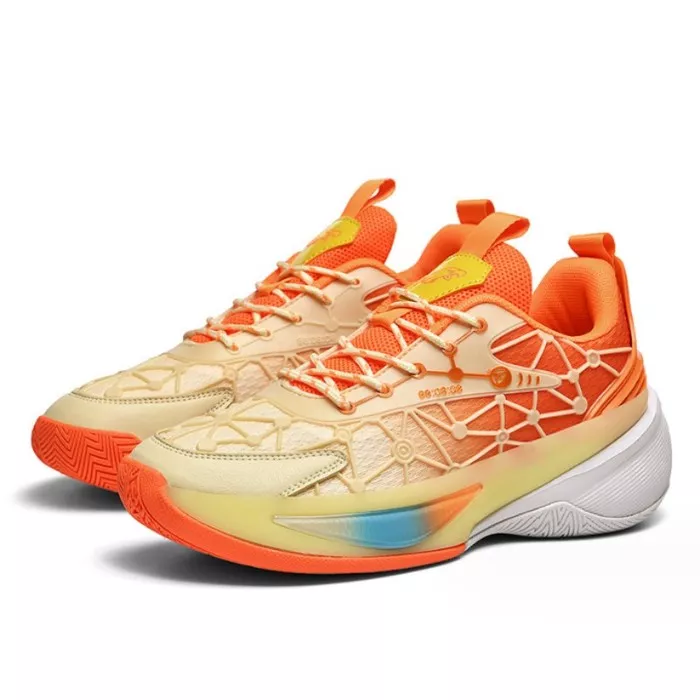
Quick Answer: A mould fee pays for the aluminium tool that shapes an injected EVA shoe; a sample fee pays for the pair made from that tool before mass production. They are separate line items and should be quoted separately. Before paying either, settle one question: who owns the tooling? At our MOQ of 600 pairs per colour, the answer decides whether your reorder price stays flat, whether your design stays exclusive, and whether the mould can follow you to another factory.
In this guide:
- Mould fee, tooling and sample fee
- Who owns the mould
- What drives mould cost in injected EVA
- Mould fee vs sample fee
- How we work out the numbers
- Ownership and the 600-pair question
- Sample fees explained
- Five buyer mistakes
- Getting your mould back
- Ownership and reorder price
- FAQ
Mould Fee, Tooling and Sample Fee: Three Different Line Items
Buyers often merge three costs that belong in different places on a quotation. The tooling is the physical mould itself — the machined aluminium cavities that give a one-piece injected EVA shoe its shape. The mould fee is what you pay to cut that tool. The sample fee is what you pay for the first pairs pulled from it before mass production starts.
With one-piece injection there is no stitched upper glued onto a separate midsole: the mould forms the whole shoe, sole pattern, sidewall and strap geometry included. That concentration is exactly why tooling matters more here than in stitched construction. One tool defines the product — so whoever holds the tool holds the product.
Who Owns the Mould — and Why It Changes Your Leverage
There are only two honest answers to the ownership question. Either the buyer paid for the tool, in which case the mould is the buyer's property and can be released or moved on their instruction. Or the factory funded it and recovered the cost inside the unit price, in which case the factory owns the tool and any exclusivity exists only because the contract says so.
The difference shows up at the worst possible moments: when you want a second quotation for leverage, when you move production, or when another buyer asks the same factory for something suspiciously close to your design. This is also where the choice between a trading company and a direct factory matters — see our breakdown of shoe trading company vs factory for why the party invoicing you is not always the party holding your tool.
What Actually Drives Mould Cost in Injected EVA
Four things move the number. First, geometry: a flat deck sole is cheap to cut; a sculpted runner with deep sidewall grooves and an embossed logo is not — compare a plain slip-on with the layered look of a mesh runner or the collar geometry of a basketball shoe. Second, size range: every band adds cavities, so a kids' programme covering 24#–29# and 30#–35# needs more tooling than a single adult size. Third, finish: textured or logo-embossed cavities take longer to machine and longer to polish. Fourth, revisions: every change after the first sample means rework on metal, not just another email.
Mould Fee vs Sample Fee: Side by Side
The two line items answer different questions. Keep them separate on the quotation and the ownership question becomes much harder to fudge.
| Line item | What it actually pays for | Who pays it | Refundable against orders? | Follows the buyer? |
|---|---|---|---|---|
| Mould (tooling) fee | Cutting and finishing the aluminium tool | Buyer up front, or factory if amortised | Sometimes, by written agreement | Yes, if the buyer paid |
| Sample fee | Material and line time for the pre-production pair | Buyer, unless waived | Usually not | No |
| Amortised-in price | Mould cost spread across production units | Buyer, indirectly | Not applicable | No — the factory keeps the tool |
| Exclusive mould | Your design locked to your brand | Buyer | Not applicable | Depends on the contract |
| Existing factory mould | A proven shape re-branded with your logo | Nobody — usually free | Not applicable | No — the factory reuses it for others |
How We Work Out the Numbers on Our Side
When artwork reaches our office in Jimei, Xiamen, the sequence is always the same. We check whether the design can actually be produced as one-piece injected EVA — no midsole seam, no glue line — because some drawings need re-engineering before any tool is cut. Then we count cavities against the size run, quote the mould fee and the sample fee as separate lines, and state the tooling ownership on the proforma invoice in writing.
Only after the sample is approved does the production clock start: 25–35 days from deposit and sample confirmation, FOB Xiamen or EXW. Standard packing is one pair per polybag, 30 pairs per carton, and a first order can combine 2–3 styles in a mixed container to test the market before committing to a full programme. Across 12 years, 500+ SKU and shipments to 60+ countries, the projects that ran smoothly were the ones where all of this was agreed before the tool was cut.
Ownership and the 600-Pair Question
Our MOQ is 600 pairs per colour, and colour — not size — is usually the axis that sets the real minimum. How the mould is paid for interacts with that number directly. If the factory amortised the tool into the unit price, the factory needs your volume to recover its money, so it will defend the MOQ and push for repeat orders. If you paid for the mould up front, the volume pressure on you is lower, but your cash exposure sits in the tool rather than in the units. Either way, the 600-pair figure and the ownership line on the invoice should be read together, not separately — we explain the full matrix in our article on MOQ per style, colour and size.
Sample Fees: What Gets Charged and What Gets Waived
Three situations, three answers. A first sample from a new mould is normally charged, because it consumes material and line time on a tool that may still need adjustment. A sample from an existing factory mould — a proven shape re-branded with your logo — is often free or nearly free, since the tool already exists. A revision sample after the first round is charged again, and it is worth every cent: the alternative is discovering a fit or geometry problem in a 600-pair production run instead of in a single pair. If a supplier waives every sample fee on a brand-new mould, ask who is paying for the tool — because someone is.
Five Mistakes Buyers Make with Moulds and Samples
- Merging the two fees into one quote. If mould and samples are a single number, ownership can hide inside it.
- Leaving ownership unwritten. A verbal "the mould is yours" is worth nothing when a factory changes hands. Put the line on the proforma invoice.
- Paying for exclusivity and ordering like it is shared. An exclusive mould paid up front still needs the volume behind it to make sense.
- Skipping the revision round. Saving one sample fee and shipping a flawed fit to your market costs far more than the sample ever did.
- Assuming the mould follows the order. It follows the invoice. The tool sits in the factory of the party that paid for it.
Getting Your Mould Back or Moving Factories
If you own the tooling, a move is a logistics exercise, not a negotiation. Ask for written release, confirm the cavity count and condition, arrange collection, and re-qualify the tool at the new factory with a fresh sample. If the factory funded the tool, expect a conversation instead: some will sell the tool at a written value, some will release it once a volume threshold is met, and some will simply decline. None of these outcomes is wrong — but all of them are easier to discuss before you have paid, which is why the ownership line belongs on the quotation, not in the dispute. It is also the moment a direct factory relationship proves its worth: the party that cut the tool is the party you are talking to.
How Ownership Shapes Your Reorder Price
A reorder should never include mould cost again. If you paid for the tool, your repeat price is production cost plus margin, full stop. If the factory amortised it, check whether the amortisation ever ends — some suppliers keep the recovery quietly running for years. Ownership also protects the designs you build a series around: a buyer who owns the tooling behind a sports range can extend it season after season without going back to the market. Before your first repeat order, re-read the invoice, not just the price list.
Frequently Asked Questions
Is the mould fee refundable?
Sometimes, and only by agreement. Some factories credit the fee against orders above a threshold; others treat it as a completed service that is never refunded. Ask for the rule in writing before paying, and make sure it is stated on the proforma invoice rather than in an email thread.
Can one mould serve several colours?
Yes. The mould shapes the shoe; colour is material, not geometry. That is why the MOQ runs at 600 pairs per colour while the tool itself is colour-blind — you pay for the shape once and reuse it across the whole palette.
Who pays for revision samples?
The buyer normally does, and should budget for at least one round. A revision fee is cheap insurance against shipping a fit problem to your market.
What happens to my mould if I stop ordering?
If you own the tooling, you can request its release regardless of order history. If the factory funded it, the tool stays with the factory, and any exclusivity depends on what your contract says.
Do kids' sizes need their own tooling?
Each size band adds cavities. A kids' programme spanning 24#–29# and 30#–35# means tooling across both bands, which is why the size run belongs in the mould quotation from day one.
Ready to price your first tool? Start the conversation here. Send the artwork and your target retail price and we will come back with a mould, a print method and a landed cost.