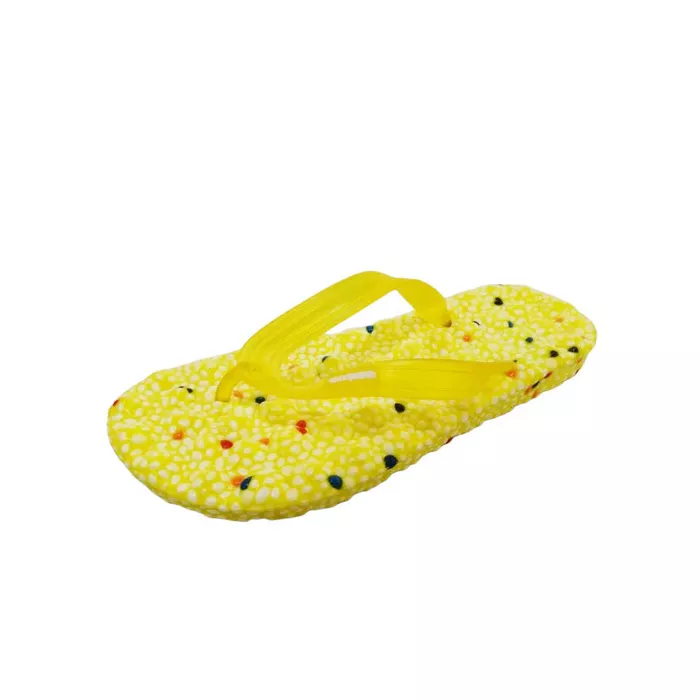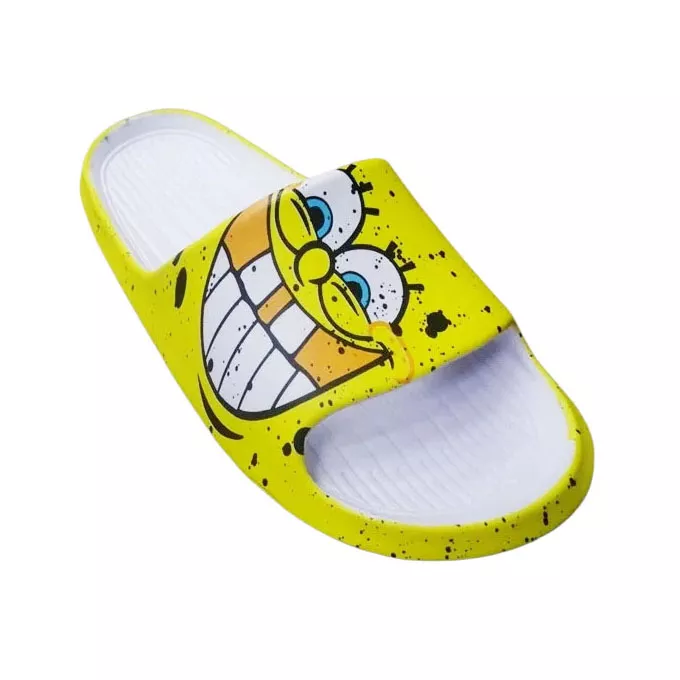
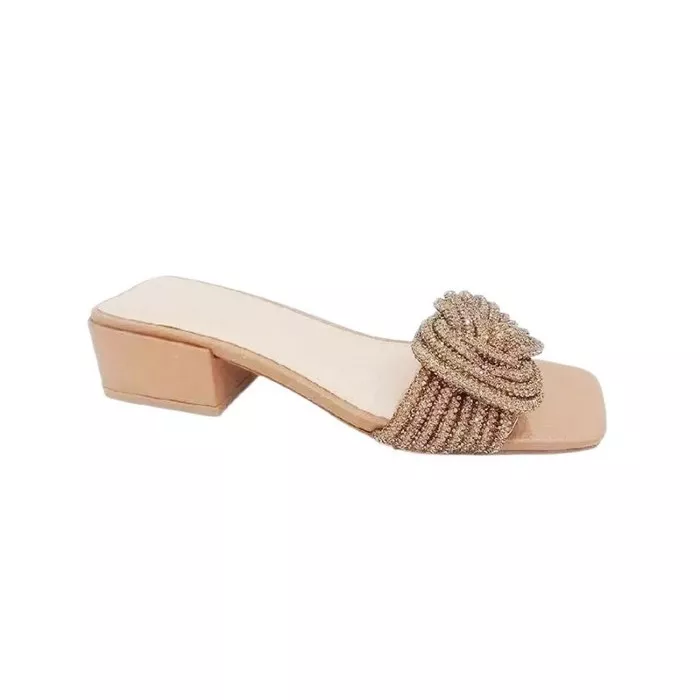
Quick Answer: An indoor slipper is specified by three decisions: footbed density, lining, and the retail price point. Density governs feel underfoot and recovery after wear; lining governs warmth, hand feel and cost. The price point decides which combination is buildable. Everything else follows the 600 pairs per colour minimum, because EVA pigment is mixed into the resin. Packing is one pair per polybag and 30 pairs per carton, with production 25-35 days after deposit and sample approval.
In this guide:
- What an indoor slipper specification must cover
- Footbed density: what it changes and how to specify it
- Lining options from bare EVA to faux fur
- Density and lining: a specification comparison
- The one-piece body and why there is no glue line
- Matching the build to retail price points
- Colour, artwork and the 600-pair rule
- How we cost this order
- Size runs, packing and carton count
- Buyer mistakes when specifying an indoor slipper
- Testing two or three styles in one mixed container
- FAQ
What an Indoor Slipper Specification Must Cover
Most indoor slipper enquiries arrive as a photograph, a target unit price and a word like plush. None of those is a specification, which is why two factories can quote the same picture at very different numbers. A brief needs the build lines before anybody can cost it: footbed density, lining, construction, colour count, artwork files, size curve, print method, packing and incoterm. Soft is not a density, warm is not a lining, and premium is not a price point until it is written as a band.
Footbed Density: What It Changes and How to Specify It
Density is the property buyers feel first and specify last. A firmer footbed holds its shape under a standing customer and keeps the outline crisp on a shelf; a softer one gives the immediate cushion that sells the shoe in a fitting room but compresses faster over a season. We do not publish a universal number, because density has to be read together with wall thickness, size grade and the mould, and a figure copied from a different style is meaningless. Specify it as a target feel on an approved sample, then freeze that sample as the reference for the whole batch. Our material comparison sets out why EVA behaves differently from PVC and rubber here. Three things to fix before the mould is cut:
- The target feel, agreed on a physical sample rather than in words.
- Whether the same density applies across adult and kids sizes.
- The wall thickness and sole profile that go with it.
Lining Options from Bare EVA to Faux Fur
Lining is the second decision and the one that changes the hand feel most. A bare EVA footbed is washable, light and the least expensive to produce; it suits a warm-climate programme and a price-led shelf. A textile or faux fur lining adds warmth and a softer first touch, but it adds a cutting, bonding and trimming operation, and it changes how the shoe is packed and how it ages in storage. The cream faux fur mule sits at that end of the range: the lining is the product, so the brief has to name pile height, colour, backing and where the trim line falls. Ask which lining the target retail band supports, then write that lining onto the spec sheet as its own line, with an approved sample attached.
Density and Lining: A Specification Comparison
Read density and lining together, because neither line stands on its own. The table below is the shorter version we work through on an indoor slipper enquiry.
| Decision | Bare EVA footbed | Textile lining | Faux fur lining |
|---|---|---|---|
| First touch | Firm, smooth, cool | Softer, dry | Softest, warm |
| Underfoot feel | Set by density alone | Density plus a thin layer | Density plus a loft layer |
| Extra operations | None after moulding | Cutting and bonding | Cutting, bonding, trimming |
| Care in use | Washable, quick to dry | Wipe or gentle wash | Slower to dry |
| Storage behaviour | Stable | Watch for creasing | Protect the pile from crushing |
| Typical programme | Price-led, warm climate | Mid band, all season | Cold season, gift-led |
The One-Piece Body and Why There Is No Glue Line
The body is a single injection moulded EVA shell. Sole and upper leave one mould, so there is no midsole seam and no glue line to stitch or bond. For an indoor slipper that matters more than it sounds: the shoe is worn for long hours, often on warm floors, and a bonded joint is the first place a returned pair fails. A lining is added afterwards, which is why the lining choice can change without cutting a new tool while the outline, the sole thickness and the size grade cannot. Anything cut into the mould is fixed at sample approval; anything added on top of the shell can still be revised within the same tool.
Matching the Build to Retail Price Points
Work backwards from the shelf, not forwards from the factory sheet. An entry band supports a bare EVA footbed, one colour and a simple polybag; a mid band can carry a textile lining, a second colourway and a printed hangtag; a premium band has room for a faux fur lining, a heavier artwork load and retail-ready packaging. Give us the target retail price as a band and the sales channel, and we will tell you which of those builds the shelf can actually support. Most buyers start in the home-comfort series and extend the range after the first season, which keeps one shape and one tool at the centre of the programme.
Colour, Artwork and the 600-Pair Rule
Colour is mixed into the EVA resin before the shot, not printed onto a finished shoe. That is why the minimum is 600 pairs per colour: a shorter run never reaches a stable shade, and cartons that differ slightly look like a quality problem on a retail shelf. Plan colourways as 600-pair blocks rather than as one mixed colour order. Send vector files with position, size and an exact colour reference, and agree the print method on an approved sample before the batch starts. The printed kids slipper sits at the other end of the range: a similar one-piece body carrying a much heavier artwork load.
How We Cost This Order
Here is how this order is costed on our desk in Room 2103, 22 Xingqian Road, Jimei, Xiamen. We start from the shape, because the mould is the whole shoe. Then the resin and the density target, since that decides how the footbed behaves. Then the lining, because it adds operations after moulding. Then the colour count, at 600 pairs per block, and the print method. Only then the packing: one pair per polybag, 30 pairs per outer carton, so one colour is exactly 20 cartons. Nicky Chen signs off the final specification; enquiries go to [email protected].
Size Runs, Packing and Carton Count
Write the size curve as quantities, not percentages, and put it in the purchase order beside the colour count. For kids we run two blocks, 24#-29# and 30#-35#; a lining that sits well at 34# can bunch at 24#, so the split is a fitting question as much as a labelling one. The packing line is fixed: one pair per polybag, 30 pairs per outer carton, which makes a 600-pair colour exactly 20 cartons. A lined slipper needs more carton volume than a bare one, so ask for dimensions and gross weight with the quotation. Our note on sizing and packaging covers the arithmetic in more detail. Three checks before you approve the packing line:
- Confirm pairs per carton and the total carton count.
- Confirm gross weight and carton cube in writing.
- Confirm whether the quotation is FOB Xiamen or EXW.
Buyer Mistakes When Specifying an Indoor Slipper
The first mistake is approving a lining on a hand-made sample and assuming the same trim holds at production speed. The second is asking for a softer footbed after the mould is cut and calling it a small revision; density can be tuned within a tool, but outline, sole thickness and size grade each need a new one. The third is copying a slipper brief onto a different shoe type without rewriting the failure list. The fourth is sending a target unit price with no target retail price, which leaves no way to choose between a bare footbed, a textile lining and a faux fur one. Three lines to put in the first email:
- Target retail price band and sales channel.
- Footbed feel and the lining named on a sample.
- Colour count, with 600 pairs per colour.
Testing Two or Three Styles in One Mixed Container
Mixed containers are routine for us, and a first order can combine two or three styles to test a market without paying for three full runs. Keep the size curve and the packing identical across the styles so that the style is the only variable; otherwise the trial tells you nothing about demand. Pair one bare-EVA slipper with one lined variant, then read the reorder data before cutting a second mould. Production is 25-35 days after deposit and sample approval, FOB Xiamen or EXW, and that clock starts when the sample is approved, not when the enquiry arrives. Over 12 years we have shipped 5 million pairs to 60+ countries across 500+ SKUs, and the programmes that hold their margin are the ones that start with a complete brief. Our range spans seven series - home-comfort, casual, sports, boots, fashion, kids and business - but a specification is always written one style at a time.
FAQ
What is the smallest first order for a private label indoor slipper?
600 pairs per colour, packed one pair per polybag and 30 pairs per carton. A first order can combine two or three styles in one mixed container, so you do not need three full runs to test a market.
Can I change the footbed density after the mould is cut?
Density can be tuned within a tool, but the outline, sole thickness and size grade are cut into the mould and need a new one.
Does a lining change the minimum order?
No. The 600-pair-per-colour rule comes from mixing pigment into the resin, not from the lining.
Which incoterms do you quote?
FOB Xiamen or EXW. Ask for carton dimensions and gross weight with the quotation, then compare every offer as cost per shipped pair rather than as a unit price.
How long until shipment?
25-35 days after deposit and sample approval. The clock starts at sample approval, so density, lining, colour and size decisions made early are what protect the ship date.
Send the artwork and your target retail price and we will come back with a mould, a print method and a landed cost. Talk to our team in Xiamen.