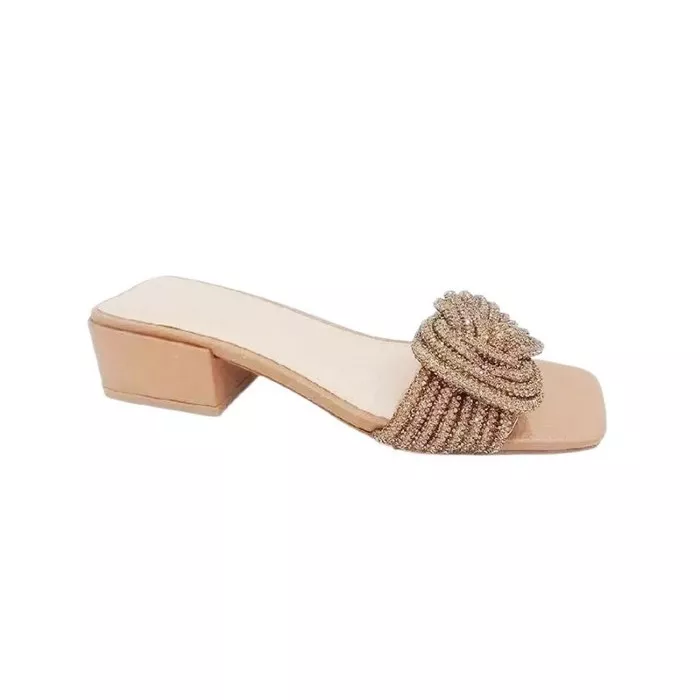
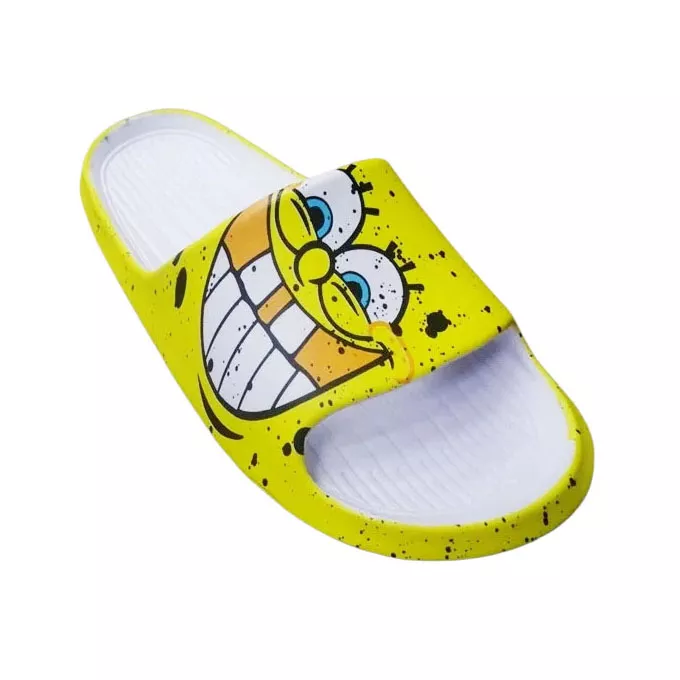
Quick Answer: Kids EVA slipper programmes are built on two size runs, 24#-29# and 30#-35#, not on one continuous scale. That split decides how many moulds you need, how a 600-pair-per-colour minimum is divided, and how the cartons are marked. The body is one-piece injection moulded EVA, so there is no midsole seam and no glue line. Agree the size curve before the deposit; production runs 25-35 days after deposit and sample approval, FOB Xiamen or EXW.
In this guide:
- What the 24-35 split actually means
- Build the size curve before you choose the colour
- How one-piece injection changes the safety checklist
- Two size runs, one mould: a comparison table
- Small parts, edges and grip: what to ask a supplier
- How we plan this run from the factory side
- Packing math for a kids size run
- Where buyers get this wrong
- Sampling both size runs without doubling the tooling
- A first kids order in a mixed container
- Lead time and what must be frozen before the deposit
- FAQ
What the 24-35 Split Actually Means
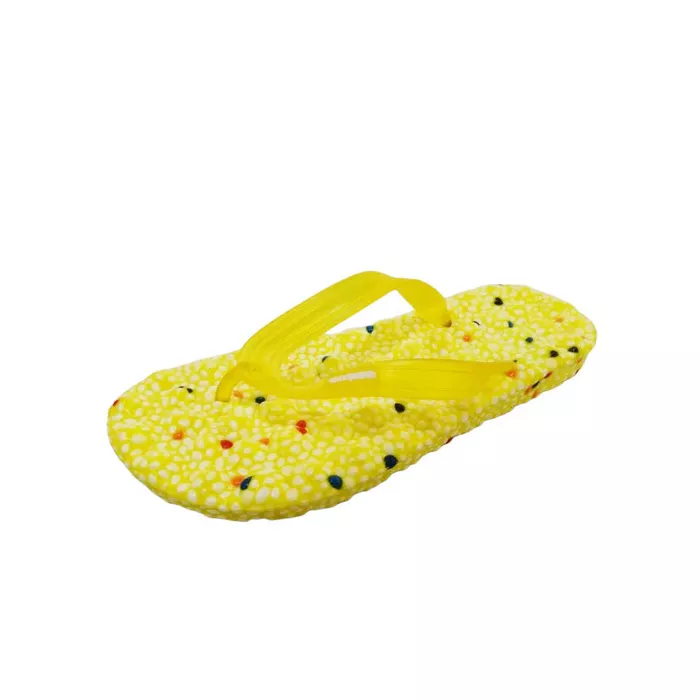
A kids slipper range is not one ladder of sizes. It is two runs: 24#-29# for the smaller foot and 30#-35# for the larger one, each with its own grade, its own outline and its own mould. Buyers often order by age instead, but two children of the same age can sit in different runs,. Write the run into the brief as a pair of ranges, then ask the supplier to quote a size curve for each run separately. The yellow print kids slipper is specified with both runs on the same sheet,. Settle the run in scope, the chart the size labels are read against, and whether one artwork has to work across both grades.
Build the Size Curve Before You Choose the Colour
Colour is the constraint that surprises buyers. EVA pigment is mixed into the resin, so the minimum is 600 pairs per colour, and that block has to be divided across the sizes in the run. If the curve is fixed after the colours are chosen, the middle sizes sell out while the end sizes sit in the carton, and the imbalance is repeated in every colourway. Set the curve as a table of pairs per size first, check that it totals 600 for one colour, and only then decide how many colours the programme carries. Two runs mean two curves, even when the artwork is identical. Buyers extending a range usually start from the kids series and add a second run once the first season's reorder pattern is visible, rather than committing both curves at once.
How One-Piece Injection Changes the Safety Checklist
The body is a single injection moulded EVA shell: sole and upper leave the same mould, so there is no midsole seam and no glue line to stitch or bond. For a children's shoe that removes one of the usual failure points, because a bonded joint is where a returned pair most often opens up. That does not make the style automatically safe for every market, and we do not claim test reports or certificates we cannot show you. It means the structural questions are simpler: what is moulded in, what is added afterwards, and what the destination market asks the importer to hold on file. Our specification guide for clogs walks through the same build lines on an adult shape.
Two Size Runs, One Mould: A Comparison Table
The two runs share a design language but not a grade. Read them as two planning units on the same order.
| Line on the brief | 24#-29# | 30#-35# |
|---|---|---|
| Mould grade | Small-foot grade | Large-foot grade |
| Size curve | Written separately | Written separately |
| Footbed outline | Shorter, narrower | Longer, wider |
| Print window | Reduced area | Full area |
| Sample to approve | One pair per run | One pair per run |
| Carton marking | Run marked on the carton | Run marked on the carton |
Small Parts, Edges and Grip: What to Ask a Supplier
Ask about construction, not about adjectives. A one-piece EVA body has its edge radius and its footbed texture cut into the tool, so both are consistent across the batch and cannot be adjusted later without a new mould. Anything applied after moulding is a separate operation and a separate line on the brief. We would rather answer these questions on a sample than on a photograph,. A different kids category makes the point: the navy print kids rain boot has a different upper construction entirely, so its checklist is not the slipper's checklist. Put three questions to any supplier:
- Are there any components attached after moulding, and how are they fixed?
- Is the footbed grip pattern part of the mould or printed on afterwards?
- Which documents does the importer need for the destination market, and who supplies them?
How We Plan This Run From the Factory Side
From our side of the desk the order is a sequence of quantities, not a description. We read the run first, then the pairs per size, then the number of colours, and only then do we know how many 600-pair blocks the order contains and how many cartons that makes. We plan the mould schedule against that block count, reserve the resin colour for each block, and set the packing line to one pair per polybag and 30 pairs per carton. Anything still open at that point becomes a delay. We have worked this way for 12 years, across 60+ countries, with 500+ SKUs and 5 million pairs shipped, from our office at Room 2103, No. 22 Xingqian Road, Jimei, Xiamen. A lemon yellow garden clog is a useful reference for how one shape carries several colour blocks.
Packing Math for a Kids Size Run
Standard packing is one pair per polybag and 30 pairs per carton, so one colour block of 600 pairs is exactly 20 cartons. That is clean when a colour sits inside one run. It gets untidy when a buyer asks for two runs to be mixed inside the same cartons, because the carton then carries two grades and the warehouse has to split every box on arrival. Mark each carton with the run, the size curve inside it and the colour, and keep the two runs on separate cartons even when they travel in the same container. If the order carries three colour blocks, the arithmetic is three times 20 cartons before any other styles are added. Mixed containers are routine for us, so this separation costs nothing in freight planning and saves a great deal of counting at the receiving end.
Where Buyers Get This Wrong
The same three mistakes appear on most first enquiries, and none of them is a factory problem. Each one is a line missing from the brief, and each one is cheap to fix before a deposit is paid and expensive to fix afterwards. Three to check on your own sheet:
- Ordering by age band rather than by the 24#-29# or 30#-35# run.
- Reading 600 pairs as an order total instead of a per-colour minimum.
- Approving one sample size and assuming it represents the other run.
Sampling Both Size Runs Without Doubling the Tooling
Sample approval is where the two runs have to be judged side by side. Ask for one pair from each run in the same colour, then check footbed length, wall height, strap position and how the artwork sits inside the reduced print window of the smaller grade. A print that fills the larger footbed will often crowd the smaller one, and that is an artwork decision, not a mould decision. Freeze both samples before the tools are cut: outline, sole thickness and size grade are cut into the mould and cannot be revised within it, while colour, print method and lining remain open. Our guide to footbed density and lining explains which build lines stay adjustable and which do not.
A First Kids Order in a Mixed Container
A first order does not have to carry the whole range. Mixed containers are routine, and a buyer can combine two or three styles to test a market before committing to a second season. For a kids programme the useful combination is one printed slipper, one plain slipper in the same run, and one style from the other run, so the reorder data shows which grade and which artwork actually moved. Keep the size curve and the packing identical across those styles; otherwise the comparison tells you nothing. Two or three styles also keep the number of colour blocks under control, since every colour still carries its own 600-pair minimum. Extend the range on the second order, once the sell-through by size is visible rather than guessed.
Lead Time and What Must Be Frozen Before the Deposit
Production runs 25-35 days after deposit and sample approval, quoted FOB Xiamen or EXW. The clock starts when the last open line is closed, not when the enquiry arrives, which is why the freeze list matters more than the calendar. Write these lines onto the order sheet and attach the approved samples and artwork files. Our contact page is the route for sending them, and Nicky Chen at [email protected] handles the brief from enquiry through to packing. Three lines that must be closed:
- Both size runs in scope, each with its pairs-per-size curve.
- Colour count, with 600 pairs per colour accepted as the block.
- Approved sample pairs for each run and the final artwork files.
FAQ
Can both size runs share one colour block?
Yes in principle, but the 600 pairs then have to be split across two curves and two grades. We recommend separate cartons per run so the warehouse does not have to sort every box on arrival.
Is 600 pairs the order minimum or the colour minimum?
It is 600 pairs per colour. Three colourways are three blocks, and each block is 20 cartons at 30 pairs per carton.
Can a first order cover only one run?
Yes. Many buyers start with 24#-29# or 30#-35# alone, then add the other run once the reorder pattern is clear. Mixed containers make that easy to extend.
Do you supply safety test reports or certificates?
We do not claim certificates we cannot show. Tell us which documents the importer needs for the destination market and we will state plainly what we can provide and what the buyer must arrange.
When does the 25-35 day lead time start?
After the deposit and the approved sample. Anything still open on the brief at that point pushes the start date, so closing the freeze list is the fastest way to protect the ship date.
Send the artwork and your target retail price and we will come back with a mould, a print method and a landed cost.